Vintage Pennants: Felt-Era Team Treasures
July 9, 2026 · 6 min read · By BGLAD
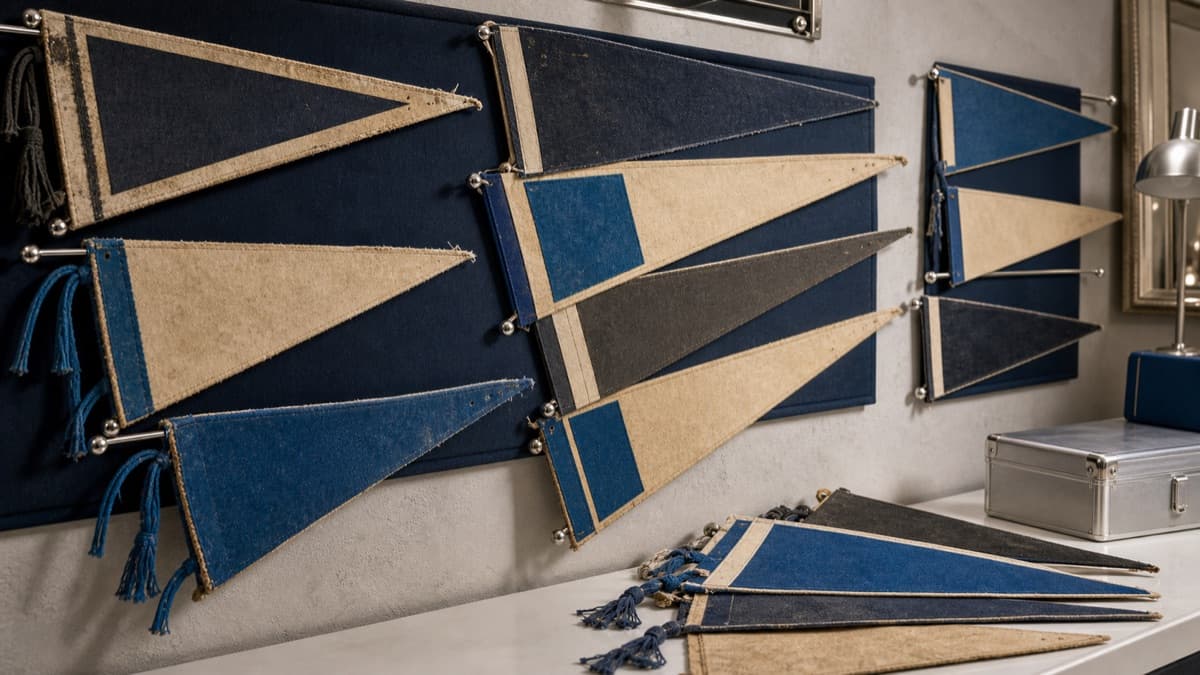
Vintage pennants are collectible felt, cloth, or fabric team banners that fans bought at stadiums, shops, trips, and special events. Collectors love them because they combine team graphics, regional pride, and the physical look of a room or ballpark from another era.
We treat pennants as display pieces first and condition projects second. A perfect example is nice, but a clean, colorful pennant with the right team, era, and graphics can still be a strong collectible even when it has honest age.
Vintage felt pennant eras and styles
Most collectors begin with the classic felt pennant: a long triangle with a printed, screened, flocked, or stitched design. Older examples often feel softer and thinner than later souvenir pennants, and many were made to be pinned to a bedroom wall, hung in a den, or brought home from a road trip. That intended use explains a lot of the damage we see today.
The broad era matters because style changed over time. Early and mid-century pennants often favor simple team names, mascots, city names, player poses, stadium scenes, or travel graphics. Later pennants can be brighter, glossier, more logo-driven, and more standardized. Championship, all-star, stadium, bowl game, and event pennants add another layer because the date or event can carry as much importance as the team.
We avoid dating a pennant from one detail alone. Fonts, mascots, league marks, team names, manufacturer tags, printing technique, size, tassels, and the exact event all help. If the pennant sits beside cards or other vintage pieces, our vintage sports memorabilia guide is useful for thinking about how object type, era, and display appeal work together.
Pennant condition: moth damage, fold lines, and fading
Pennants were not built like archival objects. Felt attracts moth damage, absorbs moisture, creases when folded, and fades when left in direct light. We look at condition in layers: first structure, then graphics, then display appeal. A tiny pinhole near the border may not matter much if the face presents well. A fold through the main logo is a bigger issue because it changes the way the piece reads on the wall.
Moth damage is one of the most common condition problems. It may show as small bites, thin spots, scattered holes, or missing areas along the edge. Fold lines are also common because many pennants were stored in drawers or boxes. Light wrinkles may relax under proper mounting, but sharp creases can be permanent. Fading can be harder to judge unless you compare protected areas with exposed ones; the back, covered folds, and areas under old framing can reveal original color.
We also check tips, tassels, stitching, stains, smoke odor, tape, glue, and whether the pennant has been trimmed. Restoration can make a pennant look cleaner at first glance, but it should be disclosed. A collector who wants originality may prefer honest wear over added fabric, repainting, or aggressive cleaning.
- Strong condition signs: full length, intact tip, bright graphics, stable felt, readable text, and minimal edge loss.
- Acceptable wear: small pinholes, minor corner wear, light toning, and gentle age waves away from the main design.
- Serious concerns: heavy moth loss, brittle felt, water staining, large folds through graphics, trimming, glue residue, and strong odor.
- Disclosure notes: replaced tassels, added backing, color touch, later signatures, or framing that cannot be safely removed.
How to display vintage pennants safely
The best display plan supports the pennant without forcing it flat. Felt can stretch, tear, or develop new stress points if it hangs only from one tip or a few old pinholes. We prefer mounts that spread the weight and use materials that do not stain the fabric. If a pennant is fragile, professional framing is worth considering before new damage happens.
Light control matters. Direct sunlight will fade colors, and high heat can make old fabric brittle. A hallway, office wall, card room, or display area with stable temperature is usually better than a window wall. Our UV protection framing and cases guide covers the same principle for paper, cards, tickets, and memorabilia: good display should slow damage, not just make the item look clean for a week.
Avoid pressure from glass against the felt. Spacers, shadow-box depth, or a proper textile mount can keep the pennant from touching the glazing. If you rotate displays, label the storage sleeve or tube with the team and condition notes so future handling is easier.
Why collectors love old team pennants
Pennants hit a collecting nerve because they are visual, local, and personal. A card is usually about one athlete. A pennant can be about a city, a stadium trip, a college campus, a childhood team, a championship year, or a wall that once belonged to a young fan. That emotional range is why pennants remain approachable even when the market for a team gets competitive.
They also display better than many vintage objects. A single pennant can fill a narrow wall, sit above a shelf of cards, or anchor a team room without needing a large case. Clean graphics and strong color matter because a pennant is often appreciated from several feet away. In our how to display your collection guide, we talk about building displays around the way people actually view a room; pennants are ideal for that because the shape naturally leads the eye.
Buying discipline still matters. A pile of mixed pennants can become clutter fast. A focused run, such as one team across different logos, one school, one stadium, one bowl game, or one road-trip theme, usually feels stronger than buying every old felt triangle that appears.
Buying and selling vintage pennants with context
When we evaluate a pennant, we want the basic facts before the price talk: team, sport, event, approximate era, size, manufacturer if marked, condition flaws, and whether any framing or backing is original to the item. Photos should include the full front, full back, tip, tassel area, close-ups of damage, and any tags or stamps.
Comparison shopping can be tricky because two pennants with the same team may differ sharply in age, graphics, and condition. A bold mascot pennant may draw more interest than a plain name pennant. An event pennant may appeal to a smaller but more committed audience. If you are browsing available vintage material, our marketplace listings are one place to study how photos, descriptions, and condition notes should work together.
For sellers, do not over-clean. Dust gently if needed, photograph accurately, and preserve any notes from the original owner. A simple story such as bought at the stadium, kept by a family member, or displayed in a local restaurant may not prove everything, but it can help the next collector understand the piece.
Common questions about vintage pennants
Are vintage pennants valuable if they have pinholes? Often, yes. Pinholes are normal because many pennants were pinned to walls. Their impact depends on location, size, quantity, and whether the main graphics still present well.
Should a folded pennant be ironed? We would not iron first. Heat, steam, and pressure can damage felt or transfer color. For a valuable or fragile pennant, ask a textile framer or conservator before trying to flatten it.
Is it better to buy framed or unframed? It depends on the framing quality. A well-mounted pennant with UV protection and proper spacing can be excellent. A pennant trapped against glass with acidic backing may look tidy while damage develops underneath.
Ready to hunt?
Graded slabs, sealed boxes, and live auctions — verified and insured.