Display Sports Card Collection: Cards & Memorabilia at Home
July 9, 2026 · 5 min read · By BGLAD
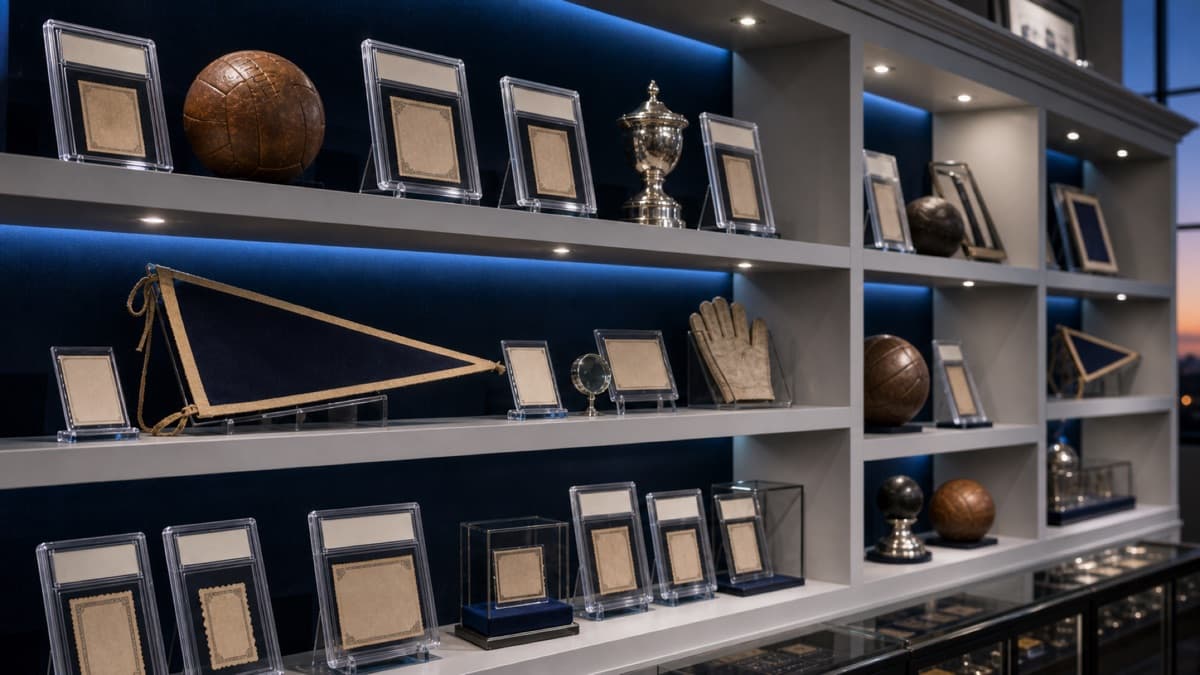
To display sports card collection pieces safely, choose stable holders, limit light exposure, avoid heat and humidity swings, and rotate items instead of leaving everything out forever. A good display should let you enjoy the collection without turning your best pieces into long-term experiments.
We think of display as controlled exposure. The goal is not to hide everything in boxes, but to decide which items deserve the wall, shelf, desk, or cabinet, then protect them from the risks that display creates.
Display vs preservation for sports cards and memorabilia
Every display choice is a trade-off. A card in a dark box gets less light and handling, but you do not see it. A card on a desk stand is easy to enjoy, but it sees room light, dust, vibration, and accidents. The right answer depends on value, fragility, replaceability, and how much enjoyment the display creates.
We divide pieces into three groups. Daily-display pieces can live out with basic protection because they are replaceable or already slabbed. Rotation pieces come out for weeks or months, then go back into storage. Archive pieces stay stored except for short viewing, photography, appraisal, or sale.
If you need storage basics before building a display, start with how to store and protect your collection. For light and case material details, pair this article with our UV protection sports memorabilia guide.
Card display stands, shelves, and frames by budget
You do not need museum furniture to build a clean display. The important points are stability, material safety, and location. A simple stand on a sturdy shelf can be better than a dramatic wall frame placed in direct sun. Start with a small display area, then improve it after you see how the room behaves during different times of day.
For cards, slabs are usually easiest to display because the holder already adds rigidity. Raw cards need penny sleeves, top loaders, semi-rigid holders, one-touch cases, or archival frames that do not press the card surface. Do not wedge cards into tight craft frames or tape them to backing boards.
- Low budget: acrylic stands, small easels, top-loader binders on a shelf, and simple shadow boxes for inexpensive items.
- Middle budget: wall shelves with lips, locking display cases, UV-filtering acrylic frames, and slab stands with a stable base.
- Higher budget: custom framing, sealed display cabinets, archival mats, museum acrylic, and professional mounting for jerseys or paper.
- Best upgrade first: better placement. Moving a display away from windows and vents often helps more than buying a fancier case.
Memorabilia display options for jerseys, balls, and tickets
Different objects need different support. A jersey should be mounted so gravity is not pulling hard on one seam. A signed ball should sit in a case that keeps it from rolling and limits dust. A ticket or program should be supported flat with archival backing and enough space that the paper is not squeezed.
For autographs, assume light is the enemy. Marker and ink can fade, especially under strong sunlight or bright display lighting. Signed jerseys, balls, photos, and tickets deserve darker locations and shorter display cycles than unsigned pieces. Our autographs and game-used memorabilia guide covers why authentication and documentation should stay with the item.
If you prefer items that are already in rigid holders, our selection of graded slabs is the easiest display category to work with. Still, even slabs should stay out of direct sunlight and away from damp rooms.
Safe lighting for collectible displays
Lighting should help you see the collection, not stress it. Avoid direct sunlight first. Window light is intense, changes through the day, and can fade paper, fabric, ink, and cardboard. If a room gets sun, keep the display on an interior wall or use the room for lower-risk pieces.
For artificial light, use the lowest comfortable brightness and avoid heat near the object. LED lighting is generally easier to manage than older hot bulbs, but no light exposure is completely free. A display that glows all day for no reason is taking on unnecessary risk.
We like lights on switches, timers, or motion sensors. Turn them on when you are in the room and off when you are not. That simple habit reduces exposure while keeping the display enjoyable.
Rotate pieces and photograph for insurance records
Rotation is the collector's best compromise. Put a few pieces on display, enjoy them, then swap them out. Rotation lowers light exposure, keeps the room fresh, and forces you to inspect condition before small problems become bigger ones.
Insurance-minded photography should happen before display. Photograph the front, back, corners, labels, serial numbers, certificates, receipts, and any damage. Store those photos separately from the collection. If a shelf fails, a basement floods, or an item disappears, memory will not be enough.
- Build a display log: note what went out, where it sat, and when it returned to storage.
- Photograph in good light: clear images help with insurance, selling, and condition comparisons.
- Keep documents together: certificates, purchase records, and appraisal notes should be easy to match to the item.
- Inspect during swaps: look for fading, warping, moisture, dust, loose mounts, and case scratches.
Common questions about displaying sports collectibles
Can you display cards in top loaders? Yes, for lower-risk cards and short-term display, if the top loader is clean, upright, and stable. For better cards, use a holder or frame that prevents sliding, pressure, and accidental falls.
Should a display case be airtight? Not necessarily. Airtight can trap moisture if the item or room is not stable. Clean, dust-limiting, and climate-conscious is usually the practical goal for home collectors.
How many pieces should be displayed at once? Fewer than you think. A focused display is easier to protect, easier to clean, and usually looks better than every shelf crowded with pieces competing for attention.
Ready to hunt?
Graded slabs, sealed boxes, and live auctions — verified and insured.