Value Vintage Sports Memorabilia: Rarity, Story, Condition
July 9, 2026 · 5 min read · By BGLAD
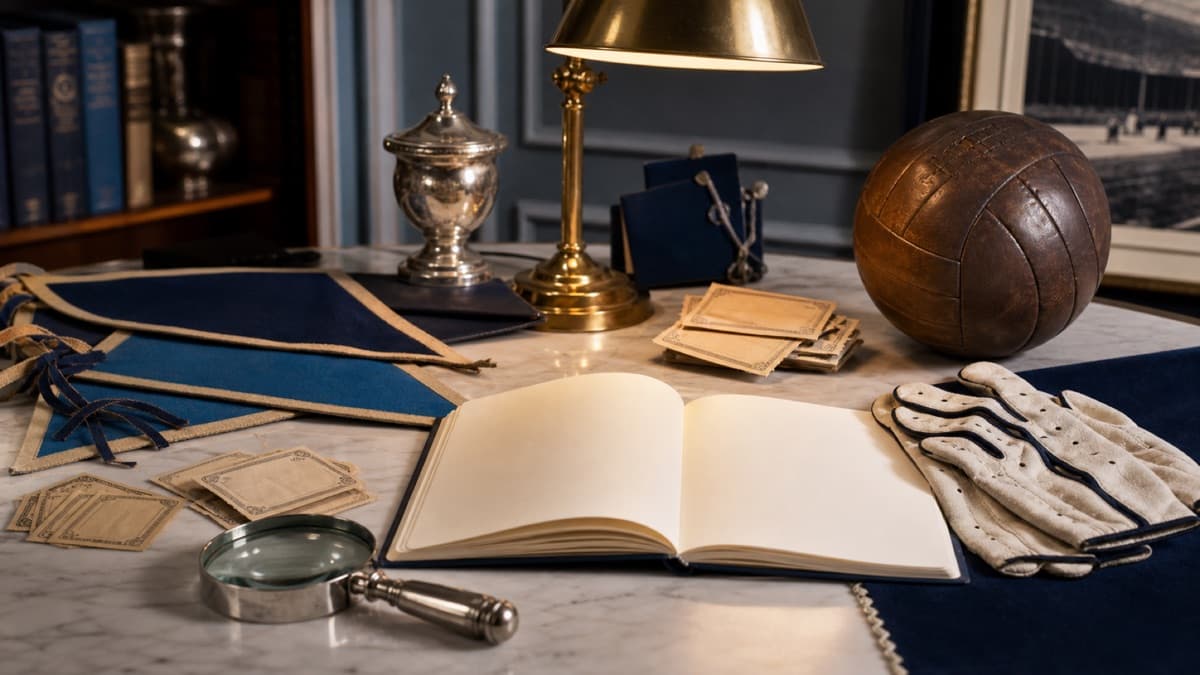
To value vintage sports memorabilia, start with four things: what it is, how many similar pieces survive, who wants it, and how confidently its story can be proven. Condition matters, but with older objects, provenance and collector demand often decide whether a piece is merely old or truly meaningful.
We look at vintage pieces less like price-guide entries and more like evidence. A pennant, program, jacket, photograph, ticket, or stadium relic needs a clear identity, a believable chain of ownership, and enough visual appeal that another collector would want to live with it.
Vintage memorabilia value starts with scarcity and demand
Scarcity by itself is not value. Plenty of old objects are scarce because nobody saved them and nobody is looking for them. Demand by itself is not enough either; if a popular team item exists in large quantities, buyers have choices. The valuable zone is where a piece is both hard to replace and tied to a player, team, venue, era, or event that collectors actively chase.
That is why we separate age from importance. A 1940s local banquet program may be charming, but its market depends on who attended, whether the cover presents well, and whether the event connects to a team or athlete with a real collecting base. A later item from a major championship, retirement game, or well-documented player appearance can outrank it if the story is stronger.
For a deeper foundation on the category, our vintage sports memorabilia guide is a good companion to this valuation process. The same demand logic also overlaps with cards, where what drives a sports card's value often comes down to player importance, condition, scarcity, and liquidity.
- Object type: game-used equipment, signage, awards, photographs, tickets, programs, and apparel do not trade on the same logic.
- Collector base: national stars, beloved local teams, defunct venues, and historic seasons usually create stronger demand than generic old sports material.
- Replacement difficulty: ask how easily you could find another example in comparable condition within a reasonable time.
- Display appeal: vintage collectors still respond to strong graphics, readable names, clean logos, and pieces that tell their story from across the room.
Provenance multiplies old sports collectibles value
Provenance is the value multiplier because it turns a claim into a record. A jersey said to be from a player is a story. A jersey with team paperwork, period photos, family correspondence, or a clear acquisition history becomes a stronger collecting object. The more important the claim, the more important the proof.
Good provenance does not have to be fancy. A dated letter from the original owner, a scrapbook page, an old newspaper clipping, a photo of the item in use, or a consistent family history can all help. The key is that the evidence should point to the specific object, not just the general moment.
We are careful with phrases like team issued, game worn, stadium used, and from the estate of. Each one implies something different. If the proof only supports ownership, say ownership. If it supports use in a specific game, document the path from the item to that game. Overstating provenance can hurt trust and make a good piece harder to sell later.
Condition grading vintage memorabilia without a slab
Most vintage memorabilia is not graded like a card. A slabbed card can be compared against a familiar 1-to-10 scale, but a signed ball, wool pennant, paper program, or satin jacket has its own condition language. We start by identifying what the object should look like when complete, then record what time, storage, handling, and repairs have changed.
Condition does not mean perfection. Older pieces are expected to show age, and honest wear can be acceptable when the item is scarce or historically important. The danger signs are damage that weakens the structure, hides the identity, suggests restoration, or makes future preservation harder.
- Paper: look for brittleness, tears, tape stains, missing pages, writing, fading, trimmed edges, and moisture marks.
- Textiles: check holes, fraying, moth damage, loose stitching, heavy staining, number or patch loss, and replaced tags.
- Balls and equipment: note cracking, deflation, shell loss, personalization, fading ink, and whether markings still identify the piece.
- Frames and mounts: inspect the back. Old tape, glue, cardboard, and acidic mats can create hidden damage even when the front looks clean.
When a professional memorabilia appraisal is worth it
A professional appraisal makes sense when the item is valuable enough that an informed written opinion will change the decision. That decision might be insurance, estate planning, donation, sale, or authentication. For ordinary display pieces, a careful market comparison may be enough. For a rare, signed, game-used, or family-owned item with a big claim, documentation is part of the value.
We would seek outside help when the item has a disputed signature, possible game use, unusual construction, restoration, or a value that could affect insurance or tax records. The same goes for collections with mixed categories where one box might contain common souvenirs and the next might contain a truly important artifact.
If you are deciding whether to sell, consign, or hold a vintage piece, our sell and consign page is the natural next step. Bring photos, measurements, close-ups of tags or markings, and any paperwork you have; even a rough ownership timeline helps us ask better questions.
Common questions about valuing vintage sports collectibles
Is older always more valuable? No. Age helps only when the object connects to demand. A common old souvenir with weak presentation may trail a newer item tied to a major athlete, venue, or moment.
Should you clean vintage memorabilia before valuing it? Usually no. Light dusting around the object may be fine, but cleaning, washing, polishing, removing tape, or reframing can change the piece. Photograph it first and ask before doing anything irreversible.
Can provenance overcome poor condition? Sometimes, but not always. Strong provenance can make a rough item important, especially if it documents a player or event. But if damage hides the key identity, threatens stability, or raises doubts about originality, condition still matters.
Ready to hunt?
Graded slabs, sealed boxes, and live auctions — verified and insured.