Vintage Sports Equipment: Old Gloves, Bats & Gear
July 9, 2026 · 6 min read · By BGLAD
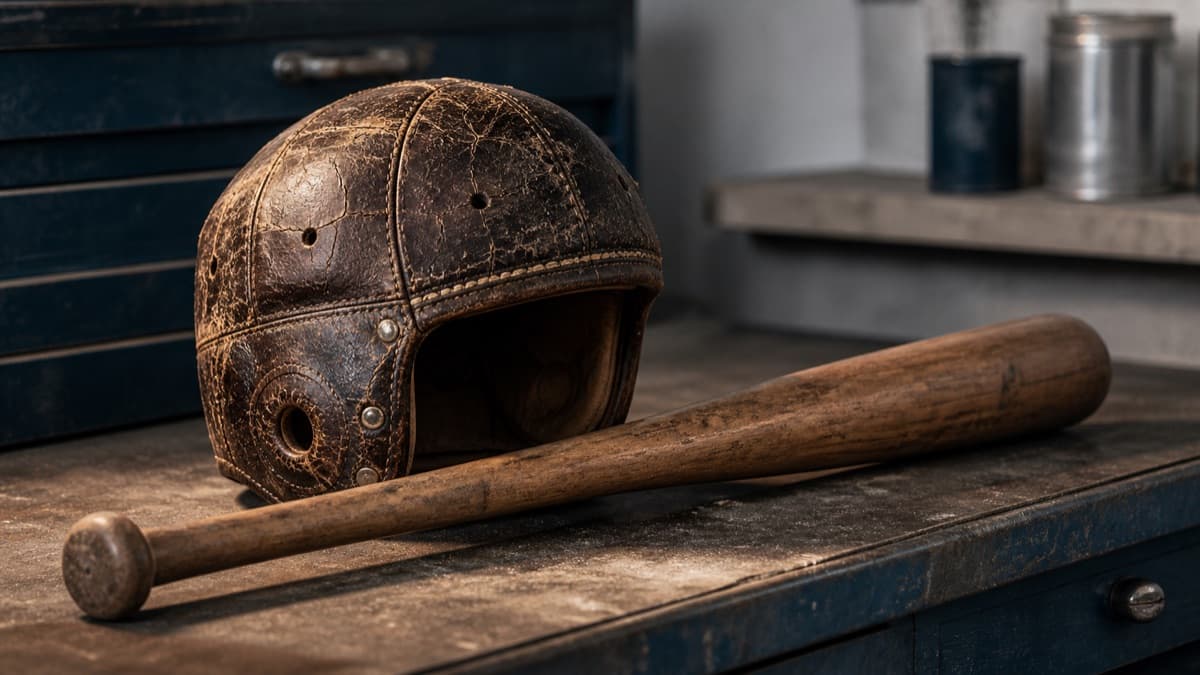
Vintage sports equipment is older game, training, or fan-used gear such as gloves, bats, masks, helmets, pads, skates, balls, and bags. Collectors value it because equipment shows how the sport was played, worn, repaired, marketed, and remembered outside the card album.
We approach old equipment with a simple rule: identify what it is before deciding what story it can carry. A glove, bat, or helmet may be a great display piece, but player attribution, game use, and age all need evidence.
Dating vintage sports equipment
Dating equipment starts with construction. Materials, shape, padding, stitching, web design, knob style, label style, fasteners, logos, and safety features all changed over time. A small change can move an item from one broad era to another, but we avoid pretending every piece can be dated to a single year without documentation.
Maker marks are usually the best starting point. Brand stamps, burned-in barrel marks, glove button logos, cloth tags, patent lines, model numbers, store labels, and catalog names can narrow the window. Then we compare the item to known examples, period catalogs, advertisements, team photos, and similar gear.
Condition can also hint at age, but it should not carry the whole case. Dark leather, cracked finish, or rusty hardware may mean age, poor storage, or both. A cleaner item is not automatically newer, and a rough item is not automatically important. The broader collecting framework in our sports equipment collecting guide is helpful if you are sorting general equipment before focusing on vintage.
Maker marks, model numbers, and catalog clues
A clear maker mark can turn a vague old object into a researchable collectible. On bats, look at barrel branding, center brands, model numbers, knob markings, length, weight, and finish. On gloves, check the palm, wrist strap, button, lining, web, and any stamped player endorsement. On helmets, masks, pads, and skates, inspect labels, rivets, straps, snaps, and interior marks.
Store models and catalog models deserve attention. Many pieces were sold through sporting goods stores with player endorsements or team-style designs. They can be very collectible as period equipment, but they should not be described as professional-use gear unless the evidence supports that claim.
Advertising can help date equipment because brands promoted new features, endorsed models, and seasonal product lines. Our vintage sports advertising article covers how ads, catalogs, and store displays connect sports objects to the retail world that sold them.
- Bats: barrel mark, center brand, knob, model number, length, weight, finish, cracks, and possible side writing.
- Gloves: maker stamp, player endorsement, web style, lining, wrist strap, button, piping, and hand wear.
- Protective gear: labels, shell material, padding, straps, snaps, cage shape, rivets, and any safety certification marks.
- Balls and pucks: stamp, league mark, stitching, shell, ink, shape, and whether signatures or inscriptions were added later.
Store model gear versus pro-used equipment
This is where collectors need discipline. A bat with a famous player's name burned into the barrel is often a retail endorsement model, not that player's bat. A glove stamped with a star's name may be a store model made for fans. A jersey-style helmet, mask, or pad may be team-color equipment without being team-issued.
Professional use requires proof. Helpful evidence can include team inventory marks, player-specific measurements, documented provenance, period photos, shipping records, uniform numbers, repairs that match known use, or direct chain of ownership. Even then, the language should match the evidence. Game used, team issued, pro model, store model, and player endorsed are different claims.
We prefer honest descriptions because they protect both buyer and seller. A beautiful retail bat from the right era can be a great collectible. It does not need to become a game-used bat through hopeful wording. When the claim is specifically about use, our game-used bats guide shows how measurements, labeling, wear, and documentation need to line up.
Honest condition for old gloves, bats, and gear
Condition for objects is not the same as condition for cards. Equipment was made to be used, so wear can be part of the appeal. The question is whether the wear is honest, stable, and consistent with the claimed use. A glove with pocket wear and dry leather tells one story. A glove with replaced lacing, heavy oil, missing lining, and a name written later tells another.
We record condition plainly. For bats, note cracks, deadwood, missing chunks, tape, knob wear, finish loss, added nails, and later signatures. For gloves, note stiffness, dry rot, broken laces, ink, re-lacing, missing tags, odor, and whether the glove can be safely opened. For helmets and pads, note brittle plastic, missing foam, strap replacements, repaint, and interior deterioration.
Cleaning is risky. Heavy oil can darken leather and weaken display value. Polishing metal can remove age. Repainting hides evidence. Stabilize first, then decide whether any conservation is needed. The line between preservation and improvement matters because future collectors will ask what is original.
- Good wear: consistent handling, field scuffs, light finish loss, period repairs, and stable leather or wood.
- Problem wear: active cracking, mold, heavy odor, replaced major parts, missing labels, structural breaks, and undisclosed repaint.
- Research notes: measurements, photos of all marks, storage history, and any known ownership chain.
- Display notes: supports, stands, mounts, and cases should hold the item without stressing weak areas.
Displaying and selling vintage equipment
Equipment displays best when the support is quiet and the object remains the focus. Bats can rest on wall racks or horizontal stands. Gloves need support inside the pocket if the leather is weak. Helmets and masks should not sit under stress on old straps. Avoid squeezing gear into holders made for modern dimensions.
For storage, keep equipment away from damp basements, hot attics, and direct sunlight. Leather, wood, rubber, and early plastics all react poorly to unstable conditions. If an item carries signatures, tags, or decals, light and handling become even more important.
When selling, take full-object photos plus close-ups of marks, labels, damage, and any evidence supporting age or use. If you want a second opinion on a group of vintage gear, our sell and consign page explains how we review condition, documentation, and market fit before recommending a path.
Common questions about vintage sports equipment
Is old equipment valuable without a famous player? It can be. Strong maker marks, early construction, attractive design, team connection, scarce sport, or clean display appeal can matter even without a superstar name.
Should vintage gloves or bats be restored? Usually only with care and disclosure. Stabilizing loose laces or protecting dry leather can make sense, but heavy oil, repaint, sanding, or replacing original parts can reduce trust.
How do you know if equipment was game used? Start with the claim, then demand evidence. Wear alone is not enough. Measurements, marks, provenance, photos, and consistent construction all need to support the story.
Ready to hunt?
Graded slabs, sealed boxes, and live auctions — verified and insured.