Collect Sports Equipment: Bats, Balls & Gloves
July 9, 2026 · 6 min read · By BGLAD
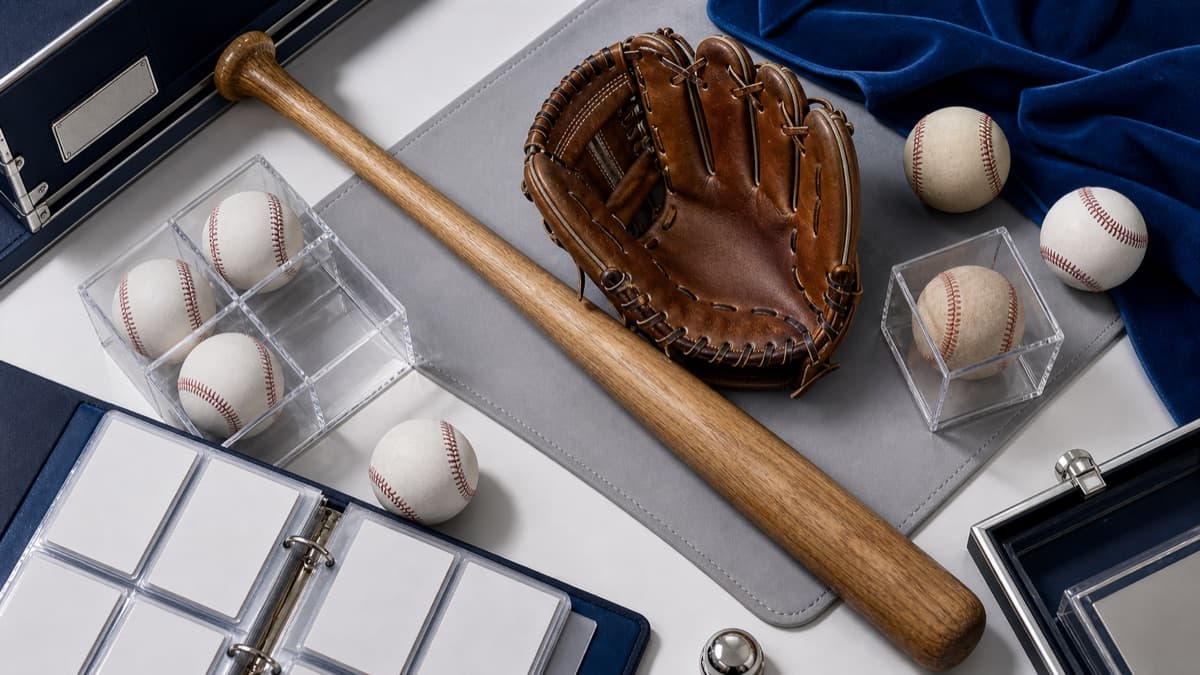
To collect sports equipment well, start by knowing what kind of object you are buying: store-model, pro-stock, team-issued, or game-used. The closer an item gets to documented field use, the more condition, provenance, and display choices matter.
Bats, balls, and gloves are approachable because they are familiar objects, but that familiarity can hide important differences. We like equipment collections that are built around clear attribution, honest condition, and a display plan before the shelf fills up.
The sports equipment collecting ladder
The first decision is where the item sits on the equipment ladder. A store-model bat, retail glove, or souvenir ball can be a perfectly good collectible, but it should be priced and described as a consumer item. These pieces are often collected for design, team connection, childhood memory, or display value.
Pro-stock and team-issued equipment sits in the middle. These are items made for professional or team use, but not always tied to an exact game. They may have player specs, clubhouse markings, team inventory tags, or construction details that separate them from retail goods. That does not automatically make them game-used, but it can make them more interesting than a standard store shelf item.
Game-used equipment is the top of the ladder because the claim is specific: this object was used in competition. That is also where the burden of proof rises. Our game-worn vs game-issued guide explains the same distinction for jerseys and uniforms, and the logic carries over to bats, balls, gloves, sticks, helmets, and other equipment.
Bats, balls, and gloves are judged differently
A bat is often evaluated through model, length, weight, knob markings, barrel stampings, manufacturer period, player characteristics, use patterns, cracks, repairs, and any visible authentication. A bat with heavy use is not automatically better than a cleaner one; the use needs to make sense for the player and the story being told.
Balls are different because they are usually event objects, autograph platforms, or game-used artifacts. A game-used baseball, basketball, football, puck, or soccer ball needs context: league authentication, team paperwork, a specific game note, or a chain of custody. Without context, it may still be collectible, but the claim should stay modest.
Gloves are their own world. Retail gloves can be collected by brand, player endorsement, model, era, or childhood connection. Professional gloves require more care because player attribution can be easy to overstate. Model, hand, web style, player name, number, alterations, and use all need to line up before a serious claim is made.
Condition standards for sports equipment collectibles
Condition is not the same thing as newness. For equipment, honest use can be part of the appeal. The question is whether the wear is original, stable, attractive, and consistent with the item. Damage that tells the object's story is different from damage that makes it hard to preserve or display.
We separate condition into surface, structure, completeness, and alterations. Surface wear includes scuffs, dirt, ball marks, ink loss, toning, and fading. Structure includes cracks, broken laces, loose stitching, deflation, warped wood, brittle leather, and repairs. Completeness includes original grips, labels, tags, boxes, certificates, or display hardware. Alterations include repainting, later inscriptions, replaced parts, and cleaning that changed the object.
- Store-model items: favor clean examples, complete labels, strong graphics, and no major structural problems.
- Pro-stock items: look for team or player spec clues, but avoid treating every spec match as proof of use.
- Game-used items: accept real wear, but demand documentation that explains the use claim.
- Autographed equipment: judge the item and the signature separately, including ink quality and placement.
- Vintage equipment: value originality and stable condition more than aggressive cleaning or restoration.
Provenance and authentication for game-used equipment
The phrase game-used should make a collector ask one quiet question: how do we know? Strong answers can include league authentication, team letters, manufacturer records, player provenance, reputable auction history, original photos, or a consistent ownership chain. Weak answers usually rely on a story that cannot be checked.
Photo matching is the strongest form of research when it is available. It connects unique marks on an object to images from a specific game or period. Not every item can be photo matched, and not every match is equally strong, but it is worth understanding the method. Our photo matching game-used memorabilia guide lays out what collectors should look for before accepting a match.
Authentication does not erase the need to inspect the piece. A letter can be real while the description is vague. A database entry can confirm an item type without proving player use. A signed bat can be authentic as an autograph but unrelated to game use. We prefer descriptions that separate what is proven, what is likely, and what is only collector belief.
Display basics for bats, balls, and gloves
Equipment takes more space than cards, so display planning matters. Bats need stable wall mounts or horizontal racks that do not stress the barrel or handle. Balls need holders that prevent rolling, reduce dust, and avoid pressure marks. Gloves should be supported in a natural shape instead of flattened under weight.
Light, humidity, and handling are the main risks. Sunlight can fade ink, leather, labels, and stitching. Dry air can make leather brittle, while damp storage can create odor, staining, and mold. If you want the collection visible, rotate sensitive pieces and use sensible protection rather than leaving everything in direct window light.
For broader setup decisions, our collection display guide covers shelves, cases, lighting, and room flow. When we list equipment or related memorabilia in our marketplace listings, clear photos of wear, labels, signatures, and paperwork matter because buyers need to judge the object from more than one angle.
Common questions about collecting sports equipment
Is store-model equipment worth collecting? Yes, if you buy it for what it is. A clean retail glove, souvenir bat, or commemorative ball can look great in a team collection. The problem starts only when store-model pieces are priced or described like pro-used items.
Should you clean old sports equipment? Usually, do less than you think. Dusting with care is one thing; oiling leather, polishing wood, removing marks, or repainting can change originality. When the item is vintage, signed, or possibly game-used, ask for advice before trying to improve it.
What is the best first equipment piece? Pick one item that fits your collecting lane and can be displayed safely. A bat for a player collection, a ball from a meaningful event, or a glove tied to a favorite era will teach you more than a pile of random equipment bought only because it was available.
Ready to hunt?
Graded slabs, sealed boxes, and live auctions — verified and insured.