Type 1 Photograph: Original Sports Photography
July 9, 2026 · 6 min read · By BGLAD
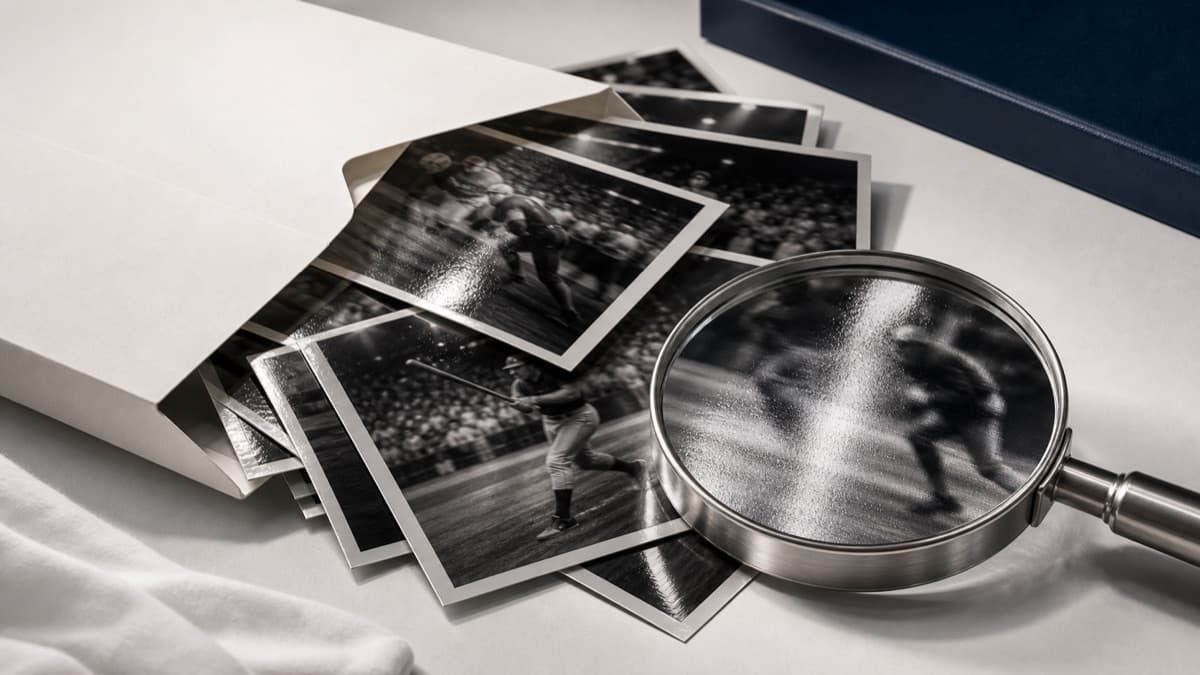
A type 1 photograph is an original photo made from the original negative or source image during the same general period as the image itself. Collectors care because Type 1 status puts the photo closest to the moment, the photographer, and the way the image first entered newspapers, teams, or archives.
We use the type system as a plain-language tool, not a magic price tag. A Type 1 photo still needs a desirable subject, strong image, believable markings, and honest condition before it becomes a piece worth chasing.
The sports photo type system in plain terms
The photo type system helps collectors describe how close a print is to the original image source and time period. Type 1 is generally the most desired because it means a first-generation or original-period photograph. Later types move farther away by time, source, or both. The exact label should come from careful examination, not guesswork from an old-looking back.
In practical shop language, we ask three questions. Was the photo made from the original negative or original file source? Was it made close to when the image was taken? Does the physical evidence support that timeline? If the answer is yes, the photo may qualify as Type 1. If it was printed later, copied from another photo, or made for later resale, it may fall into a different type.
The type label does not replace subject matter. A Type 1 image of a minor scene may be less collectible than a later photo of a major athlete or iconic moment. But when subject, image quality, and Type 1 status line up, collector interest can become much stronger.
Why Type 1 sports photos matter
Type 1 photos matter because they are close to the historical record. Many were made for newspapers, wire services, teams, magazines, photographers, or archives. They may have been handled by editors, marked for publication, cropped for layout, or stored in files for future use. That working life gives them a different feel from a later decorative print.
They also preserve images that may not exist in many physical forms. Some sports photographs were printed, published, filed away, and never widely circulated as collectibles. A strong Type 1 photo can connect a collector to a specific athlete, uniform, venue, play, or era in a way that a mass-produced item cannot.
We still keep Type 1 in balance with the rest of the collection. A photo pairs naturally with tickets, programs, cards, autographs, and game-used pieces. Our photo matching game-used memorabilia guide shows one reason original images are so useful: they can help compare equipment, uniforms, wear patterns, and event details.
News-service stamps, captions, and markings
The back of a sports photograph can be as important as the front. News-service stamps, photographer stamps, date stamps, paper labels, typed captions, grease-pencil crop marks, editor notes, filing marks, and publication slugs all help tell the story. None of those marks automatically proves Type 1 status, but together they can support the case.
We look for consistency. Does the caption match the image? Does the date make sense for the uniform, venue, or event? Does the paper feel plausible for the era? Are the stamps old, or do they look applied later? Are there signs that a caption was moved from another photo? Every mark is evidence, but evidence has to agree.
Front-side details matter too. Crop marks, retouching, edge notches, surface sheen, paper weight, and image clarity can all offer clues. If a photo has been slabbed or authenticated, we still want to understand the basis for the label. That mindset overlaps with our broader authenticating sports memorabilia approach: labels help, but the object and evidence still have to make sense.
- Helpful back marks: photographer stamps, wire-service stamps, typed captions, date stamps, filing labels, and publication notes.
- Useful front clues: crop marks, editor grease pencil, retouching, image sharpness, borders, and signs of period handling.
- Caution signs: mismatched captions, modern paper, copied markings, vague descriptions, and a photo that appears too new for the claimed date.
- Buying habit: ask for clear front and back images before paying Type 1 money.
Condition and care for original photographs
Condition standards for photos are different from cards. A crease, crop mark, or editorial notation may be part of the photo's working history. Serious problems include cracked emulsion, heavy bends through the subject, stuck paper, water damage, missing corners, fading, silvering that overwhelms the image, or tape that cannot be safely removed.
We do not clean original photos aggressively. Surface dirt, adhesive, and old paper labels can be risky. If the photo is important, ask a paper conservator before removing anything. The goal is to preserve the image and evidence, not make the back look tidy.
Storage should be simple and stable: archival sleeves, rigid support, low light, moderate humidity, and no pressure from overstuffed boxes. Avoid writing on the photo itself. If you need notes, use a separate card or sleeve label. The same common-sense handling principles in our safe handling of collectibles guide apply here: clean hands, full support, and fewer unnecessary touches.
Buying Type 1 photos with discipline
Before buying, decide whether you are paying for the image, the subject, the type designation, or all three. A dramatic action shot of a collected athlete has different appeal than a posed file photo, and a clean back with strong stamps may matter more to one buyer than another. Know which part of the value case you actually believe.
Good sellers provide front and back scans, measurements, condition notes, and any authentication paperwork. We are cautious with listings that show only the front while leaning heavily on Type 1 language. If the back carries the evidence, the back needs to be visible.
For collectors who want to study available sports photographs alongside other memorabilia, our marketplace listings can be useful for comparing descriptions, images, and condition language. The goal is to become comfortable reading the whole object, not just the headline.
Common questions about Type 1 photographs
Is every old sports photo a Type 1? No. A photo can be old and still be a later print, copy photo, wire reprint, or publication-era copy from another source. Type 1 depends on source and timing, not age alone.
Do stamps prove a photo is Type 1? Not by themselves. Stamps and captions are useful evidence, but they must match the paper, image, date, and known context. Marks can be incomplete, misleading, or moved.
Should Type 1 photos be framed? They can be, but framing should protect the photo and preserve the back evidence. If the reverse has important stamps or captions, consider scans, a double-sided frame, or storage that allows future inspection.
Ready to hunt?
Graded slabs, sealed boxes, and live auctions — verified and insured.