Handle Collectibles Safely: Cards, Tickets & Memorabilia
July 9, 2026 · 6 min read · By BGLAD
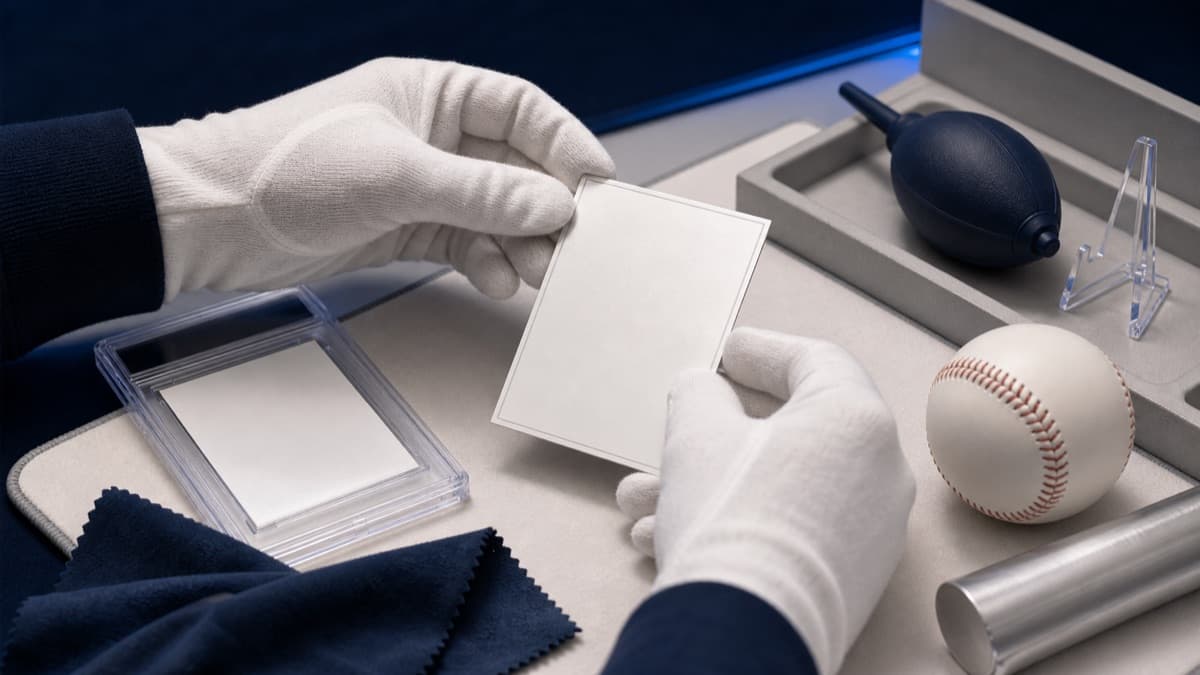
To handle collectibles safely, work with clean dry hands, use gloves only when the material calls for them, keep a soft clean surface underneath, and get cards into sleeves before anything else happens. The goal is to reduce fingerprints, pressure, slips, and well-meant "cleaning" that can become damage or alteration.
Most handling problems are simple. A card sits bare on a rough table. A ticket is pinched by a corner. A signed ball is grabbed across the autograph. A collector tries to improve a surface and changes the item forever. Better habits prevent most of that.
Clean dry hands vs gloves for collectibles
For many sports cards, clean dry hands are better than bulky gloves. Gloves can reduce fingerprints, but they also reduce feel. That can make it easier to drop a card, catch a corner, or apply uneven pressure. If you use gloves, make sure they fit well and do not shed fibers.
For paper, photographs, tickets, and glossy memorabilia, the answer depends on the item. Clean dry hands may be safer for firm control, while nitrile gloves can help when oils or fingerprints are a bigger concern. Cotton gloves are not automatically better; they can snag edges and make slippery items harder to hold.
Wash and fully dry your hands before handling. Avoid lotion, food, drinks, tape residue, and fresh sanitizer around collectibles. If the item is signed, vintage, glossy, or fragile, slow down and decide how you will support it before picking it up.
- Cards: clean dry hands, hold edges, sleeve quickly, and avoid touching surfaces.
- Tickets and paper: support with two hands or backing, especially if the paper is thin or brittle.
- Photos and glossy items: avoid fingerprints; consider well-fitting nitrile gloves when control is still good.
- Textiles and jerseys: support the weight instead of lifting by one sleeve, tag, or autograph area.
Work over surfaces that forgive mistakes
The surface under the collectible matters because slips happen. Work over a clean desk mat, fresh microfiber towel, or smooth archival-safe surface that does not shed, scratch, or hide small debris. Do not handle raw cards over concrete floors, kitchen counters, dirty tables, or textured wood with crumbs in the grain.
Clear the area first. One active card, ticket, or item at a time is safer than five piles competing for space. Keep scissors, box cutters, tape, drinks, pens, and shipping labels away from the handling zone. Open mail to the side, then move the item onto the clean surface.
For higher-value pieces, photograph before and after handling. A quick front, back, label, and close-up set helps if you later notice a flaw and need to know whether it was already there. It also supports cataloging and insurance records.
Sleeves-first habits for sports cards
For raw cards, the first safe destination is usually a penny sleeve, then a top loader, semi-rigid holder, card saver, or one-touch holder depending on purpose. Do not stack raw cards while you decide. Do not slide a card across a table to a friend. Put it in the sleeve, then talk about it.
Use the right size sleeve and holder. Thick cards, patch cards, chrome cards, and vintage cards may need different supplies. Forcing a card into a tight sleeve can catch a corner or edge. If the sleeve opening is narrow, gently bow the sleeve open or use a style made for easier insertion.
If you are preparing cards for grading, handling becomes part of the submission decision. Our card grading prep guide explains inspection and packaging habits, while how graders detect alterations shows why aggressive "improvement" can work against you.
- Sleeve immediately: the longer a raw card sits out, the more chances it has to pick up damage.
- Hold by edges: avoid fingerprints, pressure spots, and surface rub.
- Use clean supplies: dusty top loaders and scratched cases can create new problems.
- Label outside the holder: never write on a sleeve or holder while the card is inside under the pen tip.
Handling tickets, autographs, jerseys, and memorabilia
Tickets and programs should be supported, not pinched. Slide paper onto a backing board or into an archival sleeve instead of lifting by one corner. Old folds, perforations, and tears can widen quickly when paper is handled like a modern receipt.
Autographs need surface awareness. Do not touch ink if you can avoid it, even when the signature is old. On balls, helmets, photos, cards, and jerseys, pick the item up from a blank area or from the holder. Keep signed items away from strong light, moisture, and repeated handling because ink can fade or smear depending on material and age.
Jerseys, pennants, bats, and balls need different support. A jersey should be lifted with both hands, not by a sleeve or collar. A ball should not roll around loose on a table. A bat should be supported so it does not knock into other items. The same care ideas apply when you display; our home display guide covers stands, cases, and rotation.
Do not clean cards into alterations
The most important handling rule is knowing when to stop. Wiping, erasing, pressing, humidifying, trimming, recoloring, glossing, or using solvents on a card can change the object. Even when the goal is to remove dirt, the result may be damage or alteration. A card that has been "helped" can become harder to grade, sell, or explain.
Light dust on a holder is one thing. Working on the card surface is another. We do not recommend collector experiments on valuable cards. If a card has residue, paper loss, wax, ink, or a surface problem, treat that as part of the card's condition and get experienced advice before doing anything irreversible.
This is especially important for vintage cards. Original wear is acceptable to many collectors; suspicious improvement is not. A lower-grade honest card is often easier to trust than a card with a surface that looks worked on.
Common questions about handling collectibles safely
Should you always wear gloves with cards? No. Clean dry hands often give better control. Use gloves when fingerprints or material sensitivity matter, but only if the gloves fit and do not make the item harder to hold.
Can you wipe fingerprints off a card? We would not wipe a raw card surface. You can clean the outside of a slab or holder with appropriate care, but the card itself should not become a cleaning project.
Are graded slabs safe to handle casually? Safer, yes, but not indestructible. Slabs can scratch, crack, or expose labels to moisture. If you prefer items already protected for handling and display, compare graded slabs, then still keep them away from drops, heat, and sunlight.
Ready to hunt?
Graded slabs, sealed boxes, and live auctions — verified and insured.