Store Vintage Memorabilia: Wool, Leather & Paper
July 9, 2026 · 5 min read · By BGLAD
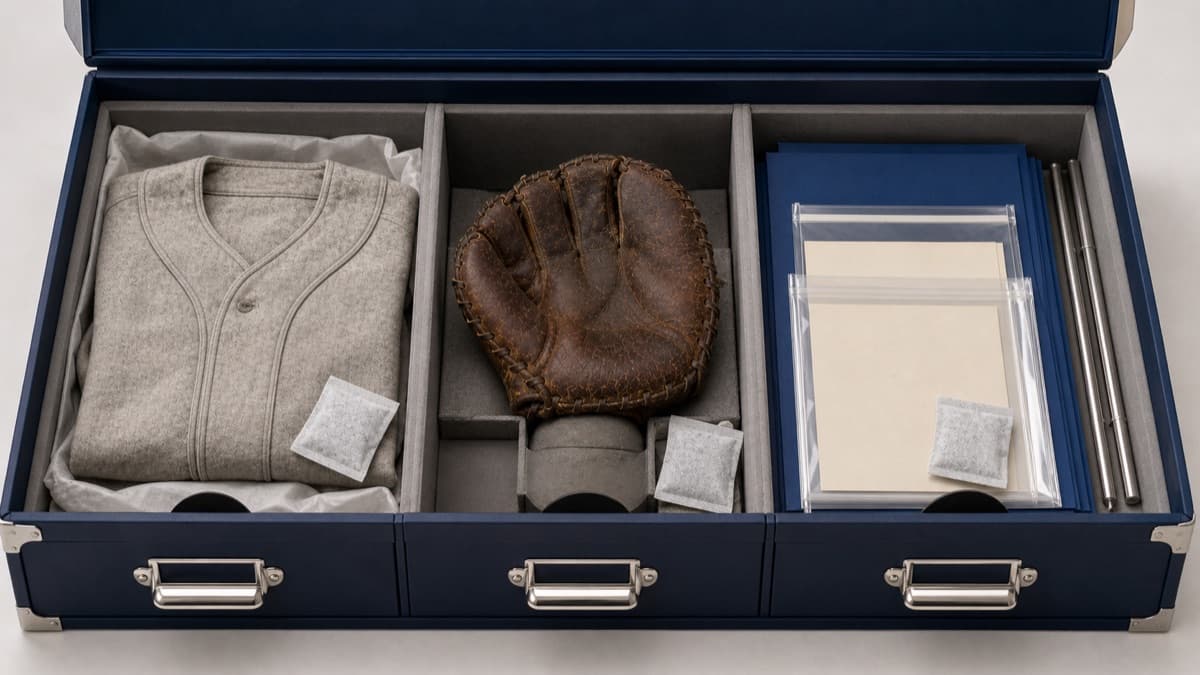
To store vintage memorabilia well, match the storage method to the material: wool needs pest control, leather needs stable humidity, and paper needs acid-free support. A calm home environment, clean hands, and archival supplies prevent more damage than elaborate display.
The biggest storage mistakes are usually ordinary ones. Attics get too hot, basements get too damp, garages swing too much, and cheap plastic can trap moisture or release chemicals. Better storage is mostly about stability, separation, and routine inspection.
Archival storage basics at home
A good home archive is cool, dry, dark, and boring. Most collectibles do better in a living space than in an attic, basement, shed, or garage. Stable temperature and moderate humidity matter more than chasing a perfect number with equipment you will not monitor.
Store items off the floor, away from exterior walls, vents, fireplaces, kitchens, bathrooms, and direct sunlight. Use boxes, sleeves, folders, and mounts made for archival storage when possible. Label containers so you do not have to dig through fragile items every time you want one piece.
For cards, photos, and mixed collections, our guide to storing and protecting your collection covers the basic supplies. Vintage memorabilia adds another layer because wool, leather, paper, metal, and ink can react differently in the same box.
Store vintage wool memorabilia without pests
Wool pennants, patches, jackets, and older uniforms attract attention from insects when they are dirty, damp, or forgotten. The goal is not to seal wool forever in plastic. The goal is to keep it clean, dry, supported, and inspectable.
Avoid mothballs unless a textile conservator tells you otherwise. They smell, they can affect nearby materials, and they are not a substitute for clean storage. If a wool item has active insect damage, isolate it from the rest of the collection until you understand the problem.
- Inspect before storage: look for holes, loose fibers, casings, dust, or new debris.
- Use breathable protection: acid-free tissue and archival boxes are safer than tight plastic bags.
- Support the shape: do not hang heavy vintage wool from weak shoulders or old seams.
- Keep food away: crumbs and residues invite pests into storage areas.
- Check on a schedule: a quick seasonal inspection catches problems early.
Leather memorabilia storage without drying or mold
Leather wants stability. Too dry and it can stiffen or crack. Too damp and it can grow mold or transfer stains. Old gloves, balls, jackets, equipment straps, and patches should be stored with enough support that their shape is not collapsing under its own weight.
Do not casually apply oils, dressings, or conditioners. Products made for modern shoes or furniture can darken vintage leather, soften surfaces, stain adjacent fabric, or create a sticky feel that attracts dust. When leather is historically important, a conservator's advice is safer than a quick shine.
Use unbuffered or appropriate archival tissue when supporting leather, and avoid direct contact with newspaper, dyed cloth, rubber bands, tape, and unstable plastics. If you smell mildew or see fuzzy growth, isolate the item and avoid brushing spores around the room.
Paper tickets, programs, and cards need acid control
Paper damage often starts with its neighbors. Newspaper clippings, acidic scrapbook pages, old tape, rubber cement, cardboard, and non-archival folders can stain or embrittle tickets, programs, scorecards, photographs, and cards. Separate the good material from the bad material before the damage spreads.
Use acid-free folders, buffered boards when appropriate, polyester or polypropylene sleeves, and rigid support for fragile pieces. Avoid PVC sleeves. Avoid pressure-sensitive tape. For programs and scorecards, do not overstuff boxes; weight and friction can create spine splits, corner bends, and surface rubbing.
Tickets deserve extra care because the small format makes tears and creases more obvious. Our ticket stub collecting guide explains why event identity and condition both matter when a small piece of paper carries a big story.
Display choices that protect stored memorabilia
Display and storage should work together. Rotate sensitive items instead of leaving them under light all year. Use UV-filtering glazing, acid-free mats, and mounts that do not pinch or tape the item. Keep framed pieces out of sun paths, damp rooms, and high-traffic spots where they can be bumped.
Before adding a vintage piece from our marketplace listings, decide where it will live when it is not on display. That plan prevents rushed choices like folding a pennant into a drawer, stacking programs under weight, or leaving a leather ball on a sunny shelf.
For framing decisions, start with UV protection, framing, and cases. Good framing should be reversible, supportive, and honest. The item should come out later without new stains, punctures, adhesive pulls, or pressure marks.
Common questions about storing vintage memorabilia
Are plastic tubs safe? They can be useful for water protection, but do not let vintage materials touch unknown plastic directly. Use archival inner boxes or sleeves, and avoid trapping damp items in sealed containers.
Should everything be climate controlled? If the item is valuable, fragile, or made from paper, leather, wool, or photographs, it belongs in a stable living space. Climate control is less about luxury and more about avoiding extremes.
Can cedar, lavender, or scent products protect wool? They may discourage some pests, but they are not a storage system. Clean, dry, inspectable storage and quick isolation of suspect items matter more than scent.
Ready to hunt?
Graded slabs, sealed boxes, and live auctions — verified and insured.