How to Store, Protect, and Insure Your Card Collection
July 2, 2026 · 6 min read · By BGLAD
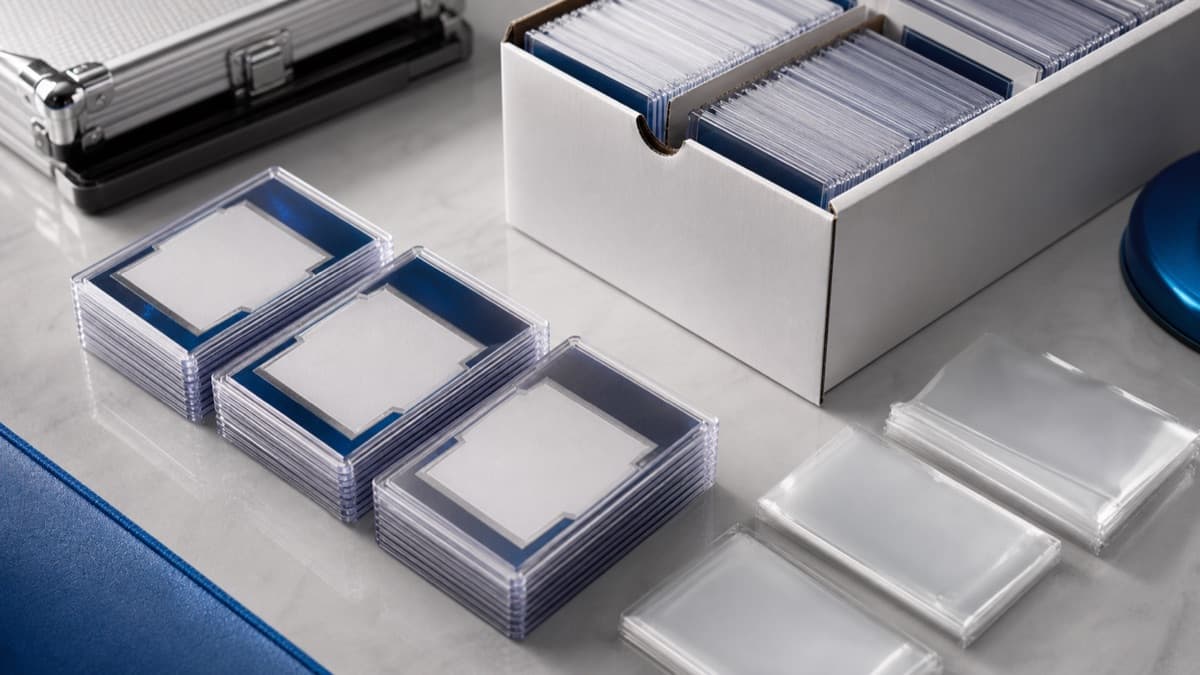
Condition drives card value more than any other factor a collector controls — and unlike the player's career, protection is entirely in your hands. A card that survives decades untouched can be ruined by one summer in a hot attic, one bare stack on a desk, one rubber band. (Yes, rubber bands: they've destroyed more vintage cards than any flood.)
Here's the full protection stack, from a ten-cent sleeve to an insurance policy.
The protection ladder
Card supplies form a ladder — climb it as value rises:
- Penny sleeves — soft polypropylene sleeves, the non-negotiable first layer for every card worth keeping.
- Toploaders — rigid plastic holders that stop bending; sleeve first, then toploader. The workhorse combo of the hobby.
- Semi-rigids (Card Savers) — flexible-but-firm holders, the standard for shipping cards to grading companies.
- One-touch magnetic holders — crystal-clear cases with UV protection for display-worthy raw cards.
- Graded slabs — the terminal form: sonically sealed, tamper-evident, and stackable. Grading is protection too — see when it's worth it.
- Binders — for sets and mid-value cards, use side-loading pages (cards can slide out of top-loading pages when a binder is flipped) and never overstuff.
Climate: the silent killer
Cardboard is paper, and paper has enemies: heat, humidity, and light. Heat warps and accelerates aging. Humidity swings cause moisture damage, wavy stock, and in bad cases mold; very dry air makes old cards brittle. Sunlight — even indirect — fades inks with shocking speed, and autographs fade fastest of all.
The rules of thumb: store cards in the living areas of your home (if you're comfortable, cardboard is comfortable), aim for stable moderate humidity rather than perfection, and keep displayed cards out of direct sun — UV-filtering cases and frames exist for anything on a wall. Attics, garages, and damp basements are where collections go to die.
One material warning: avoid old vinyl/PVC pages and cheap plastics that aren't archival-safe. Over years, PVC can leach plasticizers that stick to and damage card surfaces. Modern hobby supplies from reputable brands are acid-free and PVC-free — stick to them.
Organization is protection too
Every time you search for a card, you handle cards — and handling is risk. An organized collection gets touched less. Sort by whatever scheme matches how you think (sport, player, set, value tier), keep your best cards separated from bulk, and consider a simple inventory: a spreadsheet with card, condition or grade, cert number, purchase price, and date is enough.
That inventory does double duty: it's your insurance documentation and your estate documentation. Photograph your key cards, front and back, and store the file somewhere off-site or in the cloud.
Security and insurance for serious collections
Once a collection is worth real money, think beyond supplies:
- Fire-rated safes protect against theft and disaster — get one rated for paper documents, and remember interior humidity still matters inside a safe.
- Bank safe-deposit boxes suit very high-value slabs you don't need at hand.
- Homeowner's/renter's policies typically cap collectibles coverage at low limits. For meaningful collections, add a scheduled rider or a dedicated collectibles policy — they're inexpensive relative to the protection.
- Documentation wins claims. That inventory and photo file is the difference between a smooth payout and an argument.
Shipping: protection in motion
Most damage happens in transit. The hobby-standard method: penny sleeve, then semi-rigid or toploader, then a team bag or painter's tape (never tape touching the holder's opening directly over the card), sandwiched between cardboard, in a bubble mailer or box. For expensive cards, use a box, add insurance, and require signature confirmation. When we ship cards from our shop, every order goes out fully insured in exactly this kind of packaging — it's the standard your cards deserve too.
Ready to hunt?
Graded slabs, sealed boxes, and live auctions — verified and insured.