Collection Insurance: Insuring Cards & Memorabilia
July 9, 2026 · 5 min read · By BGLAD
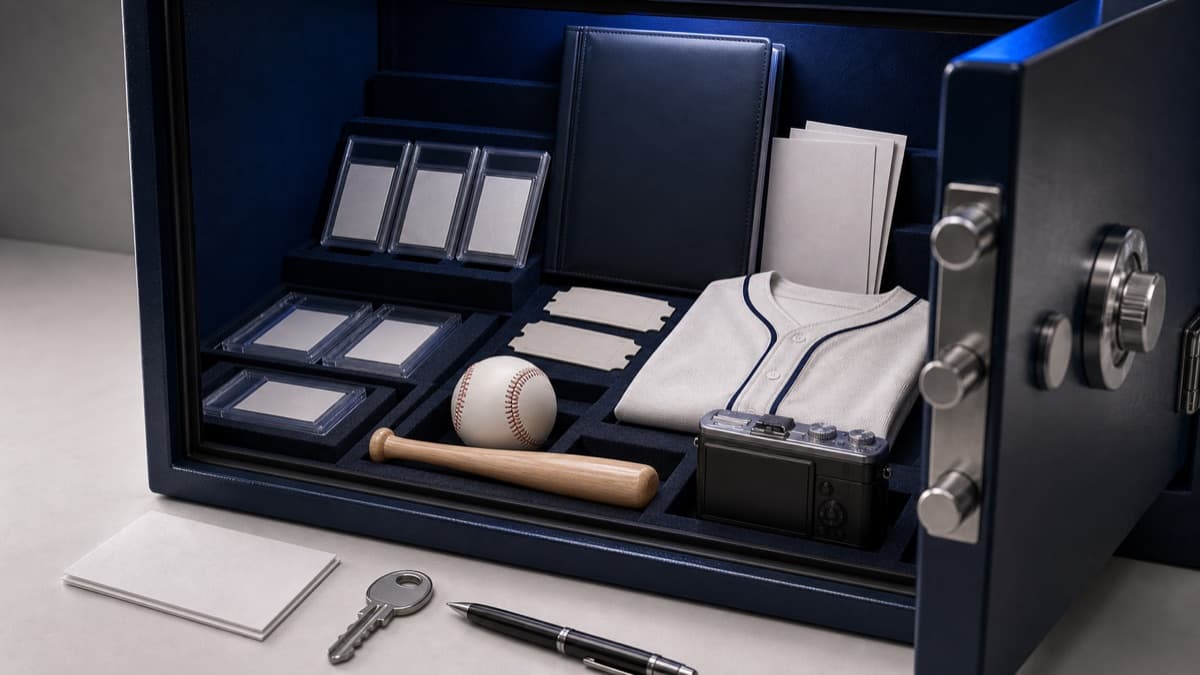
Collection insurance is the process of making sure cards, autographs, jerseys, tickets, sealed wax, and other memorabilia are actually covered if something goes wrong. Start by reading your current policy, documenting the collection, and asking a licensed insurance professional how collectibles are treated before you assume the house policy is enough.
We see collectors do a good job buying holders and cases, then leave the financial side vague. Insurance is less exciting than a new pickup, but it is part of responsible collection care once the value would hurt to replace.
Homeowners insurance limits for sports collectibles
A homeowners or renters policy may cover personal property, but that does not automatically mean every collectible is covered at full hobby value. Policies can have limits, exclusions, deductibles, special categories, and proof requirements. Some losses may be treated differently depending on whether the issue is theft, fire, water, shipping damage, disappearance, or business inventory.
That is why we do not like the phrase fully covered unless the collector has confirmed it in writing. A box of common cards, a few favorite slabs, and a room of high-value memorabilia are not the same risk. If the collection has grown, the insurance conversation should grow with it.
Storage and display choices matter too. Our guide to storing and protecting your collection covers the physical side, while displaying sports cards and memorabilia at home explains why location, light, and documentation should be planned together.
Scheduled personal property and collectibles policies
Collectors usually have two broad paths to ask about: adding specific items or categories to an existing policy, or using a specialty collectibles policy. The right answer depends on the carrier, the type of collection, the values involved, how often items travel, and whether the collection is personal, dealer inventory, or a mix.
A scheduled item is generally listed with identifying details and a stated value or appraised value. A collectibles policy may be built around the category instead of one ordinary household limit. We are describing the concept, not giving policy advice, because the exact wording is what matters.
Before you change coverage, ask how buying, selling, and consigning affect the record. If you plan to move pieces out of the collection, our sell/consign with us page is a practical reminder that clean item records make transactions easier too.
- Ask what is covered: theft, fire, water, shipping, breakage, mysterious disappearance, and items away from home may not be treated the same.
- Ask how value is proven: receipts, appraisals, comparable sales, inventory exports, and photographs can carry different weight.
- Ask how often values should be updated: a policy that made sense years ago may lag behind the current collection.
- Ask about exclusions: grading submissions, dealer activity, storage units, shows, and transit can create special questions.
Documentation for collection insurance claims
Documentation is what turns a claim from memory into evidence. A collector who can show photos, receipts, serial numbers, certificate numbers, grading labels, condition notes, and storage locations is in a better position than a collector who only remembers that a box was important.
Photograph both sides of cards and slabs. Capture labels, barcodes, serial numbers, autographs, certificates of authenticity, edition numbers, distinctive flaws, and any damage already present. For memorabilia, include wide shots and detail shots so the item can be identified without guesswork.
The photo system does not need to be fancy. It needs to be complete enough that another person can understand what was owned. Our guide to photographing cards and memorabilia properly goes deeper on lighting and file structure.
- Inventory entry: player, set, year, manufacturer, card number, parallel, grade, cert number, autograph status, and quantity.
- Ownership proof: purchase receipt, trade notes, invoice, auction record, gift note, or appraisal report when available.
- Condition proof: front, back, corners, labels, surface details, and known defects photographed before a loss.
- Location proof: which box, case, binder, room, safe, vault, or off-site location held the item.
Appraisals and valuation snapshots for card insurance
Appraisals are useful when the collection contains higher-value items, unusual memorabilia, vintage material, or pieces without simple recent comparisons. A good appraisal is not just a number. It should identify the item, explain the basis for value, and be dated so everyone knows when the opinion was formed.
Not every card needs a formal appraisal. For many modern slabs, clear purchase records and periodic value snapshots may be enough to keep your own records organized. For rare, altered, restored, signed, game-used, or one-of-one items, professional documentation can help reduce confusion later.
We like valuation snapshots because they make changes visible over time. A snapshot might include the date, source used, rough value range, and notes about confidence. Pair that with digital collection tracking so you are not rebuilding the collection from memory after a move, sale, or loss.
Common questions about collection insurance
Do you need collection insurance for a small collection? Maybe not as a separate policy, but you still need records. Even a modest collection can be hard to replace if you have no photos, receipts, or inventory.
Are graded cards easier to insure? They can be easier to identify because the label, certification number, and holder create a cleaner record. The grade does not replace the need for ownership proof or current value support.
Should you insure sentimental pieces? Insurance replaces money, not meaning. For family items, childhood cards, and signed gifts, documentation still matters because it helps with recovery, identification, and estate planning even when the emotional value is higher than the market value.
Ready to hunt?
Graded slabs, sealed boxes, and live auctions — verified and insured.