Display Sports Cards: Stands, Frames & Cases
July 9, 2026 · 6 min read · By BGLAD
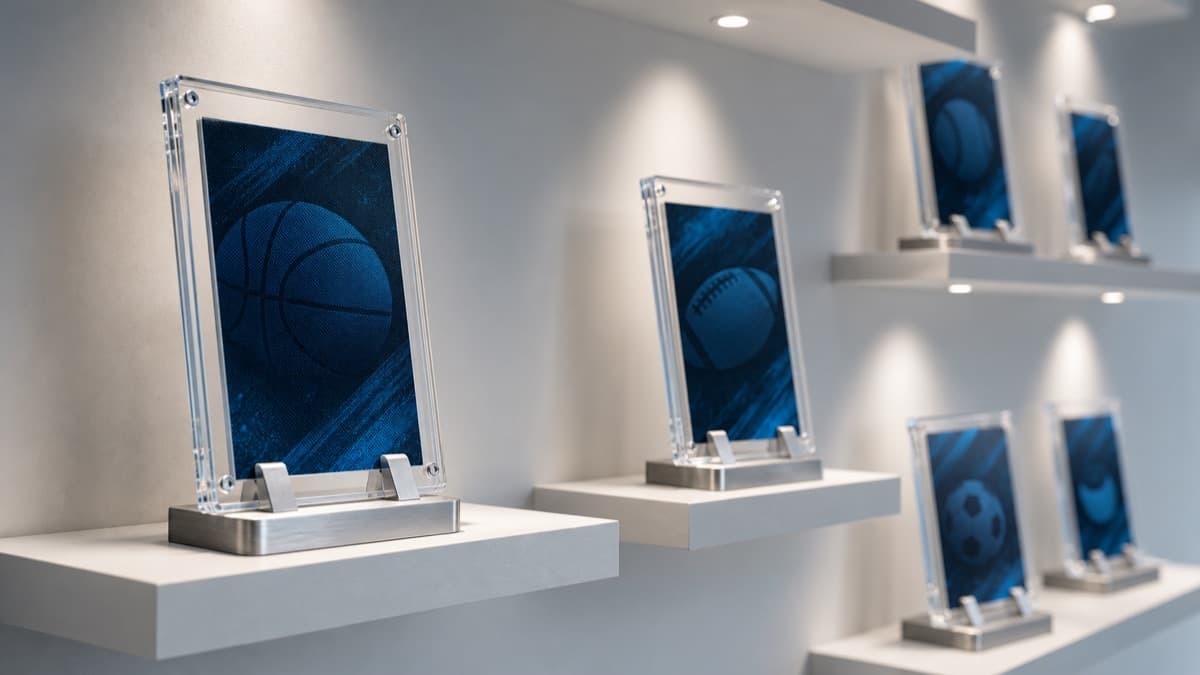
To display sports cards safely, match the holder to the card's value, keep the display away from light and moisture, and decide how much protection you are willing to trade for visibility. Stands, frames, and cases all work when the card is supported cleanly and not exposed to risky rooms.
We like display setups that are simple enough to maintain. A clean shelf with stable holders often beats an expensive wall piece placed in direct sun or a case that makes cards hard to remove and inspect.
Display sports cards by risk level
Start by sorting cards into display risk groups. Slabbed cards and lower-cost favorites can handle more casual display because they already have rigid protection or are easier to replace. Raw vintage, condition-sensitive chrome, autographed cards, rare parallels, and family-important pieces deserve more careful placement and shorter display cycles.
The question is not only "how do I show this card?" It is "what happens if this stand tips, the room gets humid, sunlight hits the shelf, or someone picks it up?" The answer should decide whether the card goes on a desk, in a wall frame, in a locking cabinet, or back into storage.
For bigger display planning, our guide to displaying sports cards and memorabilia at home covers rotation and room placement. If light exposure is your main concern, pair this with UV protection framing and cases.
One-touch stands and desktop card displays
A one-touch magnetic holder gives many cards a clean display look, especially on a stand or shelf. It is rigid, easy to handle, and usually more attractive than a loose top loader. The trade-off is fit. A card that is too thin, too thick, bowed, or textured may shift or press in a way we do not like. Use the correct holder size and do not force the card.
Desktop stands are best for cards you want to see often. Use stands with a stable base and enough lip to hold the slab, one-touch, or top loader without leaning too far back. Avoid high-traffic edges, speakers, windowsills, kitchen counters, and anywhere a pet, sleeve cuff, or stack of mail can knock the card over.
Slabs are the easiest desktop display category because the card is already sealed in a rigid holder. If you prefer that format, our graded slabs are simple to stand up, rotate, and organize. Even then, the slab is not a sunlight shield, so placement still matters.
- Best for: slabbed favorites, modern inserts, player PC cards, and cards you rotate often.
- Watch for: loose holder fit, dust, unstable stands, direct sunlight, and shelves that vibrate.
- Avoid: bare raw cards, taped holders, tight craft clips, and stands that press on card corners.
- Upgrade path: move from basic easels to wider slab stands, then to a shelf case when the group grows.
Wall frames for sports card displays
Wall frames can look great, but they carry more risk than a shelf if the materials and placement are wrong. Cards should not be pinched, taped, glued, or pressed directly against cheap backing. A good frame supports the holder or uses archival mounting so the card can be removed without damage.
Think about light before layout. A wall that looks perfect in the evening may get a band of sun every morning. That is enough to matter over time, especially for autographs, vintage paper, and colored borders. UV-filtering acrylic or glass helps, but it does not make a sunny wall safe forever.
Frames work best for curated groups: a rookie-card run, team set, championship display, or a few lower-risk favorites. We do not like crowding every valuable card into one heavy frame because removal becomes annoying, inspection drops off, and one accident can affect too much of the collection.
Shelf cases and cabinet display options
Shelf cases sit between open stands and custom framing. They limit dust, keep cards grouped, and can be moved more easily than a wall display. A case with a door or lid is useful when you want the cards visible but do not want everyone handling them.
A shelf case does not need to be sealed like a lab container. In a normal home, we are usually aiming for clean, stable, and easy to inspect. If a case traps moisture in a damp room, it can create a worse problem. Keep cases away from vents, humid basements, garages, and exterior walls that swing in temperature.
For raw cards, keep the card inside a sleeve plus top loader, semi-rigid holder, or correctly sized one-touch before it goes in the case. For slabs, leave enough room between holders so labels are readable and edges do not rub when you remove one card.
Budget ladder for card display options
Most collectors should build the display in stages. Buy a few stable holders, test the room, see what gathers dust, and notice where light lands. Once you know the space, it is easier to decide whether a wall frame or cabinet is actually worth it.
The best early upgrade is usually placement, not hardware. Moving cards away from windows, heaters, damp corners, and busy tabletops can reduce more risk than spending the same money on a fancier holder in a bad location.
- Entry level: penny sleeve plus top loader on a small stand for inexpensive cards and short-term display.
- Everyday shelf: slab stands, one-touch stands, and a dedicated shelf with a lip or backstop.
- Protected group display: acrylic shelf case, locking cabinet, or wall shelf away from sunlight.
- Framed display: UV-filtering glazing, archival backing, and removable mounting for curated runs.
- Custom room display: cabinets, controlled lighting, rotation logs, and photo records for insurance.
Common questions about displaying sports cards
Are top loaders safe for display? They can be fine for lower-risk cards if the card is sleeved first, the top loader is clean, and the setup is upright and stable. For better cards, use a more secure holder or rotate them back into storage.
Should cards be displayed in direct sunlight if they are in slabs? No. Slabs protect against handling, not unlimited light or heat. Keep any card display away from direct sun and strong lamps.
How many cards should be on display at once? Fewer than most collectors think. A focused group is easier to dust, inspect, photograph, and enjoy. Keep the rest organized with the storage habits in our collection protection guide.
Ready to hunt?
Graded slabs, sealed boxes, and live auctions — verified and insured.