League Authentication Hologram Programs at the Source
July 9, 2026 · 5 min read · By BGLAD
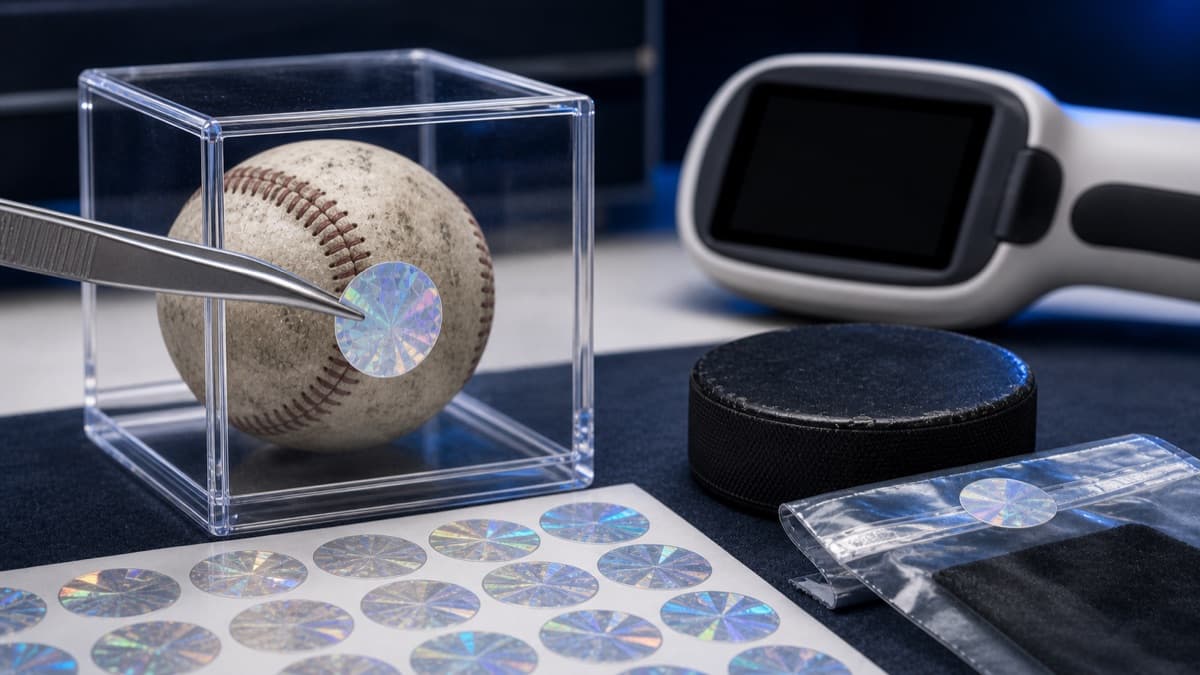
A league authentication hologram is a numbered or coded marker placed on an item by an official program, usually with a database record collectors can look up later. Its value is that the item was documented near the source of the event, not years later through memory or a loose seller story.
We like source-level authentication because it narrows the question. Instead of asking whether a ball, jersey, base, puck, or lineup card sounds believable, the collector can ask what the official record actually says and whether the physical item still matches it.
How league authentication holograms work
Most league authentication programs start with controlled access. An authenticator, team representative, or approved witness is present near the field, court, rink, clubhouse, or event area. When an item is removed from play, signed, presented, or otherwise documented, the program applies a tamper-evident hologram or coded label and records details tied to that code.
The lookup is the collector-facing part. A buyer enters the code into the official database and reviews the item description, date, event, participant, and claim language. The result might say the item was game-used, game-issued, autographed, event-used, or authenticated for a narrower purpose. Those words matter more than the presence of the sticker by itself.
A hologram is strongest when the record is specific and the item is identifiable. A baseball authenticated as used during a particular game is useful. A base tied to an inning, ceremony, or player action may be stronger. A generic description still helps, but it may not support every claim a seller wants to make.
Why source authentication beats aftermarket claims
Aftermarket authentication can be useful, but it usually starts after the item has already entered the hobby. The examiner may study tagging, wear, photos, signatures, manufacturing details, and provenance. That work can reduce risk, but it often has to reconstruct the path backward.
Source authentication works from the other direction. The item is identified at or near the event, then documented before stories have time to drift. That does not make every hologram record perfect, and it does not turn a vague record into a photo match. It simply gives collectors a cleaner starting point than a seller saying they heard it came from a clubhouse source.
This is why we separate the claim from the sticker. If the official record says game-issued, we do not upgrade it to game-used just because the item looks worn. If the lookup says autographed, we do not assume the item itself was used in a game. Our game worn vs game issued guide is the same habit applied to wording across the memorabilia market.
What to check in a hologram lookup
The lookup should be part of the buying process, not something saved for after the box arrives. Codes can be misread, labels can be moved, and sellers can accidentally attach the wrong screenshot. We want the physical object, the listing, and the database record to line up before we price the item.
Read the official language literally. A database entry that says authenticated as signed does not prove game use. A record that says issued to a team does not prove a player wore it. A ball tied to a game does not always prove a specific pitch, play, or player contact unless the record says so.
- Code match: the hologram code in photos matches the database result exactly.
- Item type: the lookup describes the same object being sold, not a similar item.
- Event detail: date, teams, player, inning, period, or ceremony details support the story.
- Claim language: used, issued, signed, presented, and authenticated mean different things.
- Physical placement: the hologram location makes sense and has not been cut away or hidden.
Where holograms fit with photo matching and provenance
A league record is strong evidence, but it is not the only evidence. For higher-end pieces, we still like to see photos of the item, paperwork, acquisition records, auction history, and any matching work that connects the object to visible use. The best file lets a future collector re-check the story without relying on one screenshot.
Photo matching can raise confidence when the item has unique visible features. A league-authenticated jersey with a vague use record may become more compelling if a clear image shows the same loose thread, repair, patch placement, or stain pattern in action. Our photo matching memorabilia guide explains how that evidence works and where it can be overstated.
Provenance matters after the hologram too. Save the lookup result, receipt, original listing, shipping record, and photos of the label. If the item goes to framing, display, consignment, or insurance review later, that file helps preserve the source-auth story. When we review game-used material for our auctions, the cleanest consignments are the ones where the proof traveled with the item.
Common questions about league authentication programs
Is a league hologram always better than a third-party letter? It depends on the claim. For items documented at the event, source authentication is often cleaner. For older items, pieces without league programs, or objects needing signature opinions, a respected third-party letter may still be useful.
Can a hologram be real while the sales claim is too strong? Yes. The code may be valid, but the seller may be stretching the wording. That is why collectors should read the lookup result before accepting headline language.
Should you buy game-used gear without a league authentication hologram? Sometimes, yes. Many legitimate pieces come from teams, players, families, equipment staff, older collections, or auction houses without league holograms. In those cases, lean harder on provenance, item details, and authentication habits from our authenticating sports memorabilia guide.
Ready to hunt?
Graded slabs, sealed boxes, and live auctions — verified and insured.