Game Used Balls & Pucks: Small Objects, Big Moments
July 9, 2026 · 5 min read · By BGLAD
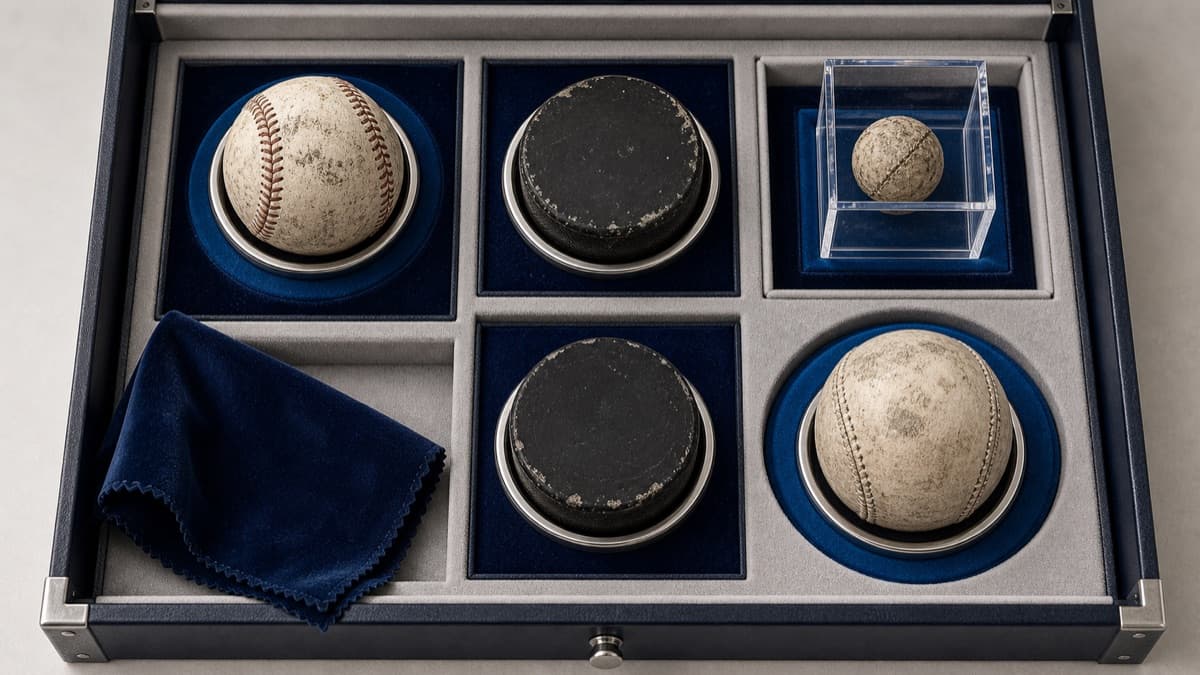
Game used balls are balls that were used in an actual game and are often collected because they can connect to a pitch, play, at-bat, touchdown, goal, or other specific moment. Pucks work the same way for hockey collectors: the smaller object matters because the documentation may tie it to something bigger than the object itself.
We judge these pieces by how specific the authentication is. A ball used sometime in a game is collectible; a ball tied to a named player, play, or milestone needs stronger paperwork and cleaner chain of custody.
How game used balls get authenticated
The strongest authentication usually starts close to the field, court, rink, or arena. A team, league, or approved authenticator may witness the object being removed from play, tag it, record details, and enter it into a database or certificate system. The value of that record depends on how specific and reliable the process is.
A basic record may only say the ball or puck was game-used. A stronger record may identify the game date, teams, inning or period, player involved, pitch or play result, or whether the object was used for a specific event. The difference matters because collectors pay for confidence and story.
Not every real game-used object has modern authentication. Older balls and pucks often rely on provenance, team sources, photos, or long ownership history. That can still be meaningful, but the price should reflect the type of evidence available. Our authenticating sports memorabilia guide explains why source and chain of custody matter across all memorabilia.
Moment attribution for balls and pucks
Moment attribution is the difference between used in a game and used for this exact thing. A ball may be tied to a foul ball, hit, strikeout, walk, touchdown play, or warmup depending on sport and documentation. A puck may be tied to a goal, save, period of play, or generic game use.
The wording has to be read carefully. Used during a game is not the same as used to score a goal. Authenticated to a player appearance is not the same as hit by that player. If the paperwork names a moment, the certificate or database should support that wording without the seller stretching it.
The strongest moment pieces are easy to explain to another collector. Date, teams, player, play, and authentication number should line up. If you need several assumptions to make the story work, the attribution is probably weaker than the headline suggests.
- Generic game use: the object was used in the game, but no specific play is identified.
- Player attribution: the object is connected to a named player through a recorded pitch, play, goal, or handling event.
- Milestone attribution: the object is tied to a career, team, playoff, debut, final-game, or record context.
- Unclear attribution: the description implies a moment that the paperwork does not actually say.
Condition and markings on game used balls
Condition expectations are different for game-used objects. Scuffs, dirt, grass marks, black transfer, puck marks, stamping wear, and surface abrasions can be part of the appeal. A perfectly clean item may still be game-used if authenticated, but visible wear often helps the object feel connected to play.
Do not clean away evidence. A dirt mark, grass stain, or puck transfer may be part of why the piece is interesting. Heavy cleaning can make the item look less convincing and may damage signatures, holograms, labels, or natural surfaces.
Signatures add another layer. A game-used ball signed after the fact can be a strong display piece, but the autograph and the game-use authentication should be treated as separate claims unless the paperwork ties them together. For ink issues, our autograph ink and fading guide is a useful reference.
Displaying balls and pucks safely
Small memorabilia is easy to display badly. A loose baseball on a shelf can roll, collect dust, or get handled too often. A puck in direct sun can fade labeling. A football or basketball may need a stand that supports the shape without stressing one point.
Use a holder that lets the authentication number remain visible or at least accessible. UV-filtering acrylic, stable stands, wall-mounted puck cases, and labeled cubes can all work. Keep certificates, receipts, and database printouts together so the story does not get separated from the object.
For important pieces, we like a display that identifies the moment without crowding the item. A small plaque or printed copy of the authentication record can help, while the original paperwork stays stored safely. Our how to display your collection guide covers the same preservation-first mindset.
Buying game used balls and pucks online
Online listings should show the object, authentication number, paperwork, and any database match. If the seller claims a specific moment, the photos should make it possible to verify that claim before you pay. A blurry hologram or cropped certificate is not enough for a premium piece.
Compare the asking price to the confidence level, not just the story. A ball from a regular game with generic use is different from a ball tied to a major play. A puck from a game is different from a goal puck with solid documentation. Our photo matching memorabilia guide is useful when visible marks or images support the claim.
When we offer game-used pieces through our marketplace listings, the goal is to make the authentication path plain. Collectors should be able to tell whether they are buying a general game-used object, a player-attributed piece, or a moment-specific item.
Common questions about game used balls and pucks
Are all authenticated game-used balls valuable? No. Authentication creates confidence, but value still depends on sport, player, game, moment, condition, scarcity, and collector demand.
Is a goal puck better than a regular game-used puck? Usually it has a stronger story if the goal attribution is well documented, but the player, game context, and paperwork determine how much that matters.
Can you handle a game-used ball? You can, but repeated handling adds oils, wear, and risk. For anything with strong moment attribution, use a display case and handle it only when necessary.
Ready to hunt?
Graded slabs, sealed boxes, and live auctions — verified and insured.