Travel With Cards: Shows, Flights & Road Trips
July 9, 2026 · 5 min read · By BGLAD
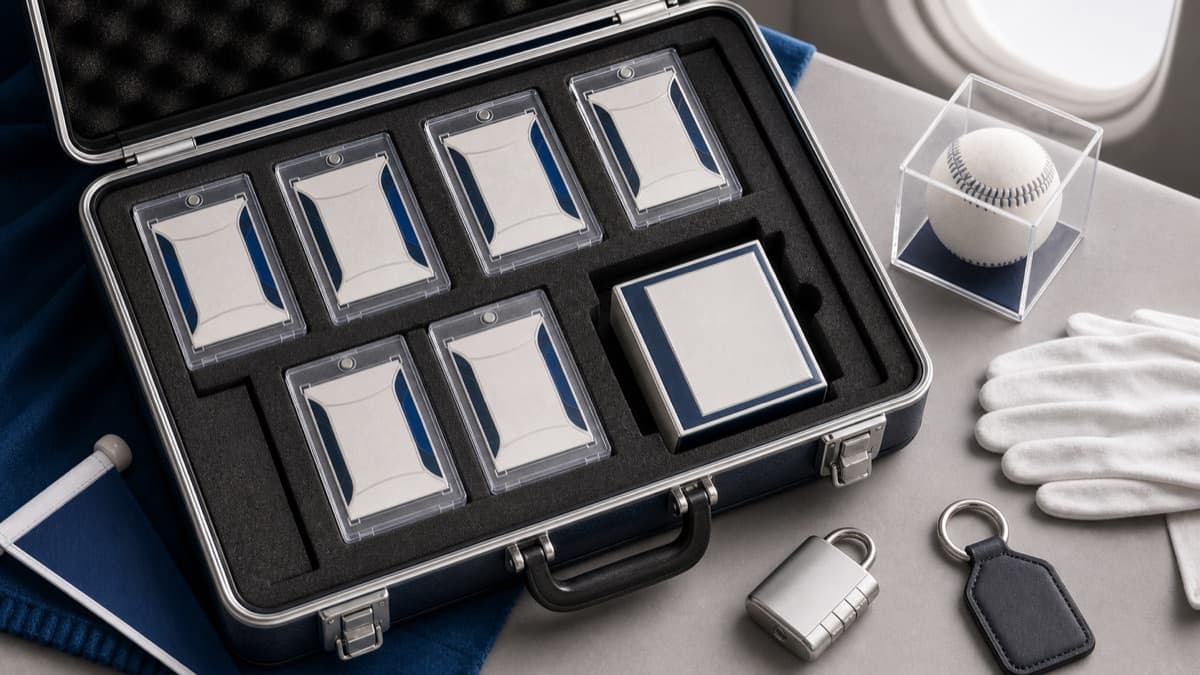
To travel with cards safely, pack them in rigid cases, keep important items with you when possible, document what is moving, and plan for security checks, weather, theft, and show-floor handling. The best travel setup protects the collection without making every stop slow and stressful.
Cards get damaged in transit because they slide, bend, get crushed, get wet, or get handled too many times. A little planning before a show, flight, or road trip prevents most of the avoidable problems.
Cases that protect cards in transit
Travel cases should stop movement first. A strong outer shell matters, but loose cards inside a hard case can still knock into each other. Use rows, dividers, foam, graded-card boxes, team bags, and snug storage so the contents do not shift when the case is lifted, turned, or placed under a seat.
For raw cards, use sleeves plus semi-rigid holders, top loaders, or one-touch cases depending on value and purpose. For slabs, use cases or boxes sized for holders, not generic containers that leave extra space. The more valuable the item, the less we want it improvising its own route inside the bag.
If you are still building the right home setup, our shipping sports cards safely guide is useful because the same pressure and movement problems show up in luggage. Card shows for beginners also helps plan what to bring and what to leave home.
- Short local trip: small slab case, top-loader box, or padded case carried by hand.
- Full show day: locking case, row boxes, price labels, inventory notes, and a separate bag for supplies.
- High-value travel: fewer items, better documentation, no loose boxes, and a plan for bathroom, meals, and hotel stops.
- Bad weather: plastic protection inside the case, not just a case that looks sturdy from the outside.
Flying with cards and carry-on rules of thumb
For flights, keep meaningful cards in your carry-on when practical. Checked bags can be delayed, searched outside your view, stacked under heavy luggage, or exposed to rough handling. A carry-on does not remove every risk, but it keeps the collection closer to you.
Security screening is part of the trip. Dense stacks of slabs, top loaders, and boxes can attract attention because they look unusual on a scanner. Pack so the case can be opened cleanly if inspection is needed, and stay calm if an officer asks to look. Ask politely if you can handle delicate items or explain how the case opens.
Airlines set size and weight rules, and those rules can vary by ticket, aircraft, and route. Check before you leave home. The goal is not to win an argument at the gate; it is to avoid being forced to check a case that you expected to keep with you.
Road trips, hotels, and card show handling
Road trips create different risks. Heat, cold, moisture, and theft are the big ones. Do not leave cards in a parked car longer than necessary, especially in direct sun or freezing conditions. Even if the cards are not stolen, temperature swings can stress holders, paper, and autographs.
Hotels are another weak point. Bring only what you need, keep cases closed, and avoid spreading inventory across beds, chairs, and tables where items can be forgotten. If the room has a safe, understand its size and limitations before you rely on it. For high-value travel, fewer items are easier to protect than a rolling museum.
At shows, keep your case in physical contact or in direct sight. Crowded aisles, trade nights, and busy tables are not the place for loose stacks. If a card comes out, know who has it, what came out with it, and where it goes back.
Show-day kit for traveling card collectors
A good show kit saves decisions. The kit should let you protect purchases, inspect potential trades, record deals, and avoid borrowing supplies from a stranger's table. Keep it compact enough that you will actually carry it all day.
If you prefer travel-ready inventory, slabbed cards are easier to identify, stack, and document than many raw cards. Our graded slabs are a good example of why labels and cert numbers help when cards are moving between home, shows, and records.
- Protection: penny sleeves, team bags, top loaders, semi-rigid holders, graded-card sleeves, and a small microfiber cloth for holders.
- Inspection: phone light, portable charger, clean magnifier, and a dark or neutral surface for checking corners.
- Records: inventory list, price notes, trade targets, receipt folder, and a way to mark sold or traded items.
- Personal basics: water, snacks, cash plan, ID, medication, and a bag that leaves both hands free when needed.
Insurance in transit for card travel
Do not assume insurance follows the collection everywhere. A homeowners policy, collectibles policy, shipping policy, show policy, or dealer policy may treat transit differently. The only way to know is to ask before the trip and read the actual terms.
For valuable travel, document the case before leaving. Take a photo of the packed contents, keep an inventory list, and save receipts for purchases made on the road. If a card is bought, sold, traded, or consigned during the trip, update the record while the details are fresh.
Our collection insurance guide covers the bigger coverage questions. Travel adds one more layer: where the item was, who had custody, and what proof exists if it disappears or gets damaged.
Common questions about travel with cards
Should you put cards in checked luggage? We avoid it for valuable items when a carry-on is possible. Checked luggage adds handling, delay, and access risks that collectors usually cannot control.
Can you bring cards through airport security? Cards themselves are not the usual problem, but dense cases may be inspected. Pack so you can open the case without spilling or exposing everything at once.
How many cards should you bring to a show? Fewer than you think. Bring the cards that fit the goal of the day, not every card that might possibly start a conversation.
Ready to hunt?
Graded slabs, sealed boxes, and live auctions — verified and insured.