Sports Card Brands Explained: Topps, Panini, Bowman & More
July 9, 2026 · 6 min read · By BGLAD
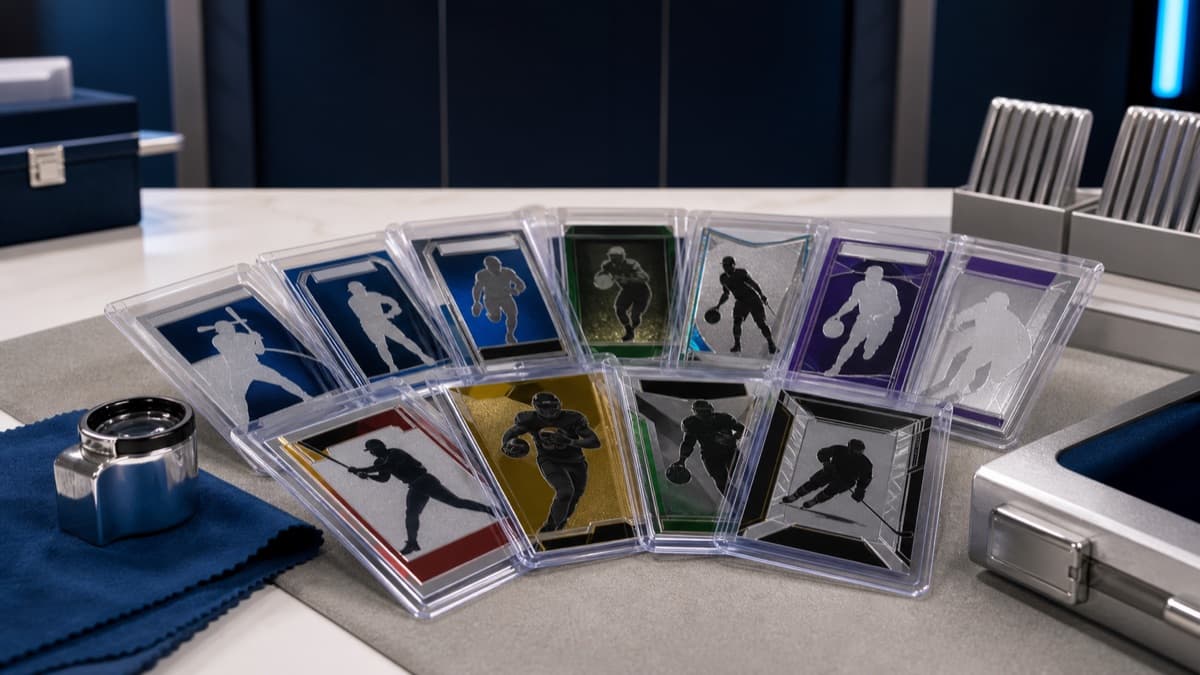
Sports card brands are the product families collectors use to understand who made a card, what license it may carry, and how the hobby usually views that release. The brand on the front of a box or checklist can affect design, rookie demand, rarity structure, and resale interest.
Brand should not be the only reason to buy a card. We look at the player, set, condition, year, scarcity, and collector demand together. Still, knowing the major brands helps you sort a showcase, compare singles, and avoid treating every shiny card like it came from the same lane.
Major sports card brands collectors see most
Most collectors use the word brand in two ways. Sometimes it means the company family, such as Topps, Panini, Upper Deck, or Leaf. Other times it means a product line under that company family, such as Bowman, Chrome, Prizm, Donruss, Select, O-Pee-Chee, or Metal.
That distinction matters because collector expectations are usually product-specific. A flagship-style base release is judged differently from a premium chromium release, a prospect-heavy product, an autograph-driven product, or an unlicensed product built around player signatures.
If you are new, start by identifying the sport, year, maker, product line, card number, and whether the card is base, insert, parallel, autograph, relic, or short print. Our sports card terminology glossary is useful when the box language starts stacking terms.
- Company family: Topps, Panini, Upper Deck, Leaf, and similar makers.
- Product line: Bowman, Chrome, Prizm, Select, Donruss, Finest, Allen & Ginter, O-Pee-Chee, and many others.
- Release year: the year printed on the product, not always the season shown in the photo.
- Checklist role: base card, rookie, insert, parallel, autograph, memorabilia card, or variation.
- License status: whether the card shows league and team marks, player rights, both, or neither.
Topps, Bowman, and baseball card brand families
Topps is strongly associated with flagship-style baseball cards, long-running designs, update-style releases, Chrome versions, heritage designs, and broad collector recognition. When someone says "the Topps rookie," they are often talking about a card that sits close to a mainstream checklist rather than a niche insert.
Bowman is part of the Topps family and is especially known for prospect collecting. Many baseball collectors pay close attention to a player's first Bowman card because it may arrive before the player's standard major league rookie card. That does not make every Bowman card valuable, but it explains why Bowman checklists get studied closely.
Topps also uses many product lines that serve different collectors. Chrome products lean into reflective finishes and refractors. Heritage-style products lean into older designs. Allen & Ginter, Stadium Club, Finest, and other lines each have their own identity. The best question is not "is it Topps?" but which Topps product is it, and what is that product known for?
Panini, Donruss, Prizm, and modern chase cards
Panini is a major modern card family, especially familiar to collectors through product lines such as Prizm, Donruss, Optic, Select, Mosaic, National Treasures, and many autograph or memorabilia-heavy releases. Prizm in particular became hobby shorthand for chromium-style parallels and color ladders in multiple sports.
Donruss and Optic show how product families can overlap. Donruss is often viewed as a more traditional paper-style release, while Optic is commonly treated as the chromium version of that design family. Select and Mosaic have their own parallel structures. National Treasures is generally associated with premium formats, autographs, and patch-style cards.
The Panini conversation also shows why licensing needs plain language. A card can be officially licensed for one sport or release and not another. It can show player images but not team logos, or it can carry different rights depending on the league, players association, and product year. Packaging and checklists matter more than memory.
- Prizm: known for chromium shine, color parallels, and broad modern demand.
- Donruss: a recognizable brand with base sets, Rated Rookie language, and accessible formats.
- Optic: commonly viewed as a chromium-style companion to Donruss designs.
- Select and Mosaic: known for tiered designs, parallels, and modern insert structures.
- National Treasures: associated with premium cards, autographs, and memorabilia elements.
Upper Deck, Leaf, and specialty card brands
Upper Deck has deep collector recognition and is especially important in hockey conversations, where its flagship-style Young Guns rookie cards are a major collecting lane. Upper Deck also has product lines that cover premium finishes, retro designs, autographs, and entertainment properties.
Leaf is different. Leaf products are often discussed around autographs, prospects, draft picks, legends, and niche releases. Some Leaf cards may not show major league team logos, but that does not make them irrelevant. A strong autograph checklist, an early prospect card, or a scarce card of the right player can still have demand.
The broader point is that brand reputation is sport-specific. A hockey collector may treat Upper Deck differently than a baseball collector treats Bowman. A basketball collector may compare Prizm, Select, and Optic differently than a soccer collector compares sticker-style products and chrome releases. The brand only makes sense inside its sport and checklist.
Licensed vs unlicensed sports card brands
Licensing is simple in concept and messy in practice. A fully licensed card usually has permission to use league marks, team logos, uniforms, player names, and player images for that product. An unlicensed or partially licensed card may have player rights but no team logos, or it may use airbrushed images, college uniforms, or generic design choices.
Collectors often pay more for major licensed cards because logos help the card feel official and easier to recognize. But unlicensed cards can still matter when the autograph is strong, the player demand is real, the design has fans, or the card fills a collecting goal. We avoid blanket rules because the right answer changes by player, product, and price.
When we evaluate cards for our marketplace listings, we identify the exact product before talking value. That means checking the card number, checklist, parallel name, autograph status, and licensing context. It is the same process we recommend at home.
- Look for team logos: missing logos can signal limited or different licensing.
- Read the back: manufacturer text and legal lines often clarify rights.
- Check the checklist: official product checklists help confirm the card's exact name.
- Compare similar cards: licensed and unlicensed versions should not be priced as identical.
- Buy for your goal: a PC autograph and a flagship rookie may serve different purposes.
Common questions about sports card brands
Which sports card brand is best? There is no single best brand across the hobby. Topps flagship baseball, Bowman prospect cards, Panini Prizm, Upper Deck hockey, and other lines each have their own collector base. The better question is which brand matters most for the sport, player, and card type you collect.
Do brands affect grading? Brand does not change the grading scale, but production quality can affect how often certain issues appear. Thick cards, dark borders, chromium surfaces, foil edges, and condition-sensitive designs all need closer inspection before grading. Our guide to sports card condition basics explains what to check.
Should beginners buy by brand or by player? Start with player, sport, budget, and collecting goal, then use brand to narrow the field. If you love parallels and inserts, read card parallels explained before chasing every color in a product line.
Ready to hunt?
Graded slabs, sealed boxes, and live auctions — verified and insured.