Grading Vintage Cards: Era Rules That Matter
July 9, 2026 · 6 min read · By BGLAD
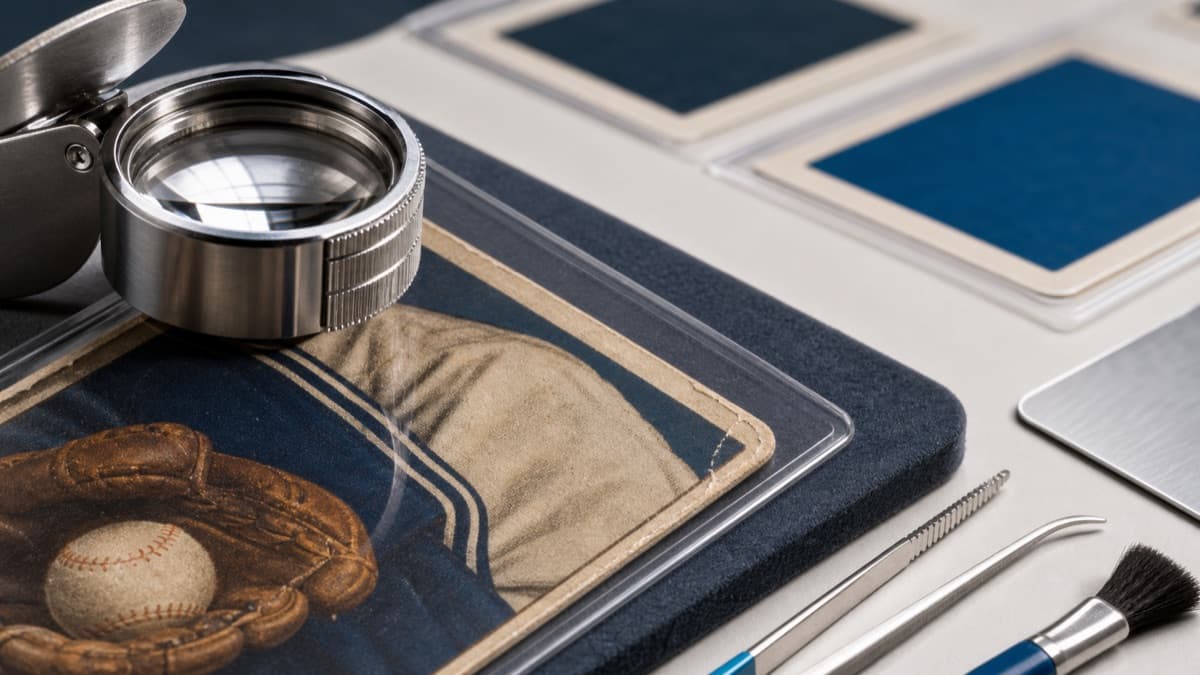
Grading vintage cards is less about chasing perfection and more about confirming authenticity, condition, and eye appeal for the era. A vintage 6 can be a strong result when age, production quality, scarcity, and collector demand all support the card.
Modern grading instincts can mislead collectors on older cards. A tiny flaw on a modern chrome rookie can be a deal-breaker, while honest wear on a decades-old card may be completely acceptable.
Vintage card grading starts with the era
The word vintage covers a lot of ground. Pre-war tobacco and candy issues, post-war gum cards, regional releases, oddball food issues, and early modern sets were not produced, cut, packed, or saved the same way. A condition standard that makes sense for one era can be unrealistic for another.
Older cards often show rough cuts, print registration issues, wax or gum exposure, centering problems, paper toning, and corner wear from actual handling. That does not mean condition stops mattering. It means you judge the card against what is normal for the issue, not against a pack-fresh modern standard.
If you are still building that baseline, compare several graded examples from the same set and year. Our vintage vs modern cards guide explains why production context changes the way collectors think about condition and value.
- Pre-war cards: authenticity and completeness often matter before numeric grade.
- Post-war stars: centering, wrinkles, paper loss, and eye appeal drive large differences.
- Oddball issues: checklist accuracy and set knowledge matter because labels can be tricky.
- High-grade vintage: small flaws can matter a lot because supply is usually thinner.
Why a vintage 6 can be a win
Many collectors new to grading see a 6 and think "middle grade." In vintage, that can be the wrong reaction. A well-centered, clean-looking 6 from a popular vintage set can be more appealing than a technically higher card with poor centering, staining, or distracting print problems.
The number still matters, but vintage buyers often weigh the whole presentation. A card can have light corner wear and still look excellent in a display. Another card can earn the same number but feel worse because a crease, tilt, stain, or print mark pulls the eye immediately.
This is why we talk about the card in hand before the label. The label gives a shared language, but the buyer still has to like looking at the card. If you want a broader framework for value beyond grade, our guide to what drives a sports card's value is worth reading alongside this one.
Condition expectations by vintage era
Pre-war cards are often collected with a wider tolerance for wear because survival itself matters. Many were handled, pasted, stored in albums, trimmed by owners, or exposed to tobacco, candy, and paper-aging problems. For important subjects, a low-grade but authentic card can still be highly collectible.
Post-war cards usually have more available comparisons, so grading gets more condition-sensitive. Corners, centering, snow, print dots, wax stains, gum stains, surface wrinkles, and back damage can separate otherwise similar copies. The hobby often rewards cards that look clean for the assigned grade.
Late vintage and early modern cards can be deceptive because they look familiar to modern collectors. Production quality improved in some ways, but centering, print defects, chipping, and factory roughness still show up. Do not assume a card is a high-grade candidate just because it has sharp color in a photo.
- Use the same issue as your comparison set whenever possible.
- Separate factory flaws from handling damage, but do not ignore either.
- Check the back as carefully as the front.
- Value eye appeal, especially centering and clean color, when grades are similar.
Authenticity value for pre-war sports cards
For many pre-war cards, authentication can matter more than the exact grade. A card with paper loss, a crease, writing, or album residue may not be a numeric-grade beauty, but a respected authentication holder can still answer the most important question: is it real?
That matters because pre-war cards attract trimming, rebacking, recoloring, and reproduction concerns. The buyer pool is often more comfortable when a third-party holder confirms the card and calls out major issues. A straight grade is nice, but an authentic designation can still provide liquidity and confidence.
This does not mean every rough card should be submitted. Grading fees, shipping, and insurance still have to make sense. But for older cards where raw authentication is hard for the average buyer, encapsulation can be a service to the next owner as much as a value play.
When to grade vintage cards
Grade vintage when the slab solves a real problem. That problem might be authentication, protection, easier resale, estate planning, or helping buyers compare condition. Do not submit just because a card is old. Submit because the result will make the card easier to understand and handle.
Before sending, inspect for alterations. Trimmed edges, recolored borders, pressed creases, erased pencil, rebuilt corners, and paper work can change the outcome. Our article on how graders detect alterations covers the types of issues that matter before you spend the fee.
If you are buying rather than submitting, study completed listings and dealer inventory, not just asking prices. Compare cards within the same grade and notice which ones you would actually want to own. That habit will help more than memorizing a single price guide number.
- Grade when authenticity is a meaningful concern.
- Grade when resale trust matters more than keeping the card raw.
- Grade when the card is strong enough for its era and issue.
- Skip grading when fees are likely to exceed the benefit.
Common questions about grading vintage cards
Is a low-grade vintage card worth buying? It can be, especially when the card is authentic, complete, visually honest, and priced for the grade. For scarce or iconic older cards, low grade does not automatically mean low desirability.
Should you crack out a vintage card to chase a better grade? Usually no unless the evidence is strong and the value spread justifies the risk. Vintage cards can be fragile, and a holder already gives protection, authentication, and market language.
Where should you start if you want vintage slabs? Start with cards you understand and can compare. Looking at finished examples, shop inventory, and our available graded slabs can help train your eye before you buy the card you really want.
Ready to hunt?
Graded slabs, sealed boxes, and live auctions — verified and insured.