Vintage vs. Modern Cards: Two Hobbies in One
July 2, 2026 · 6 min read · By BGLAD
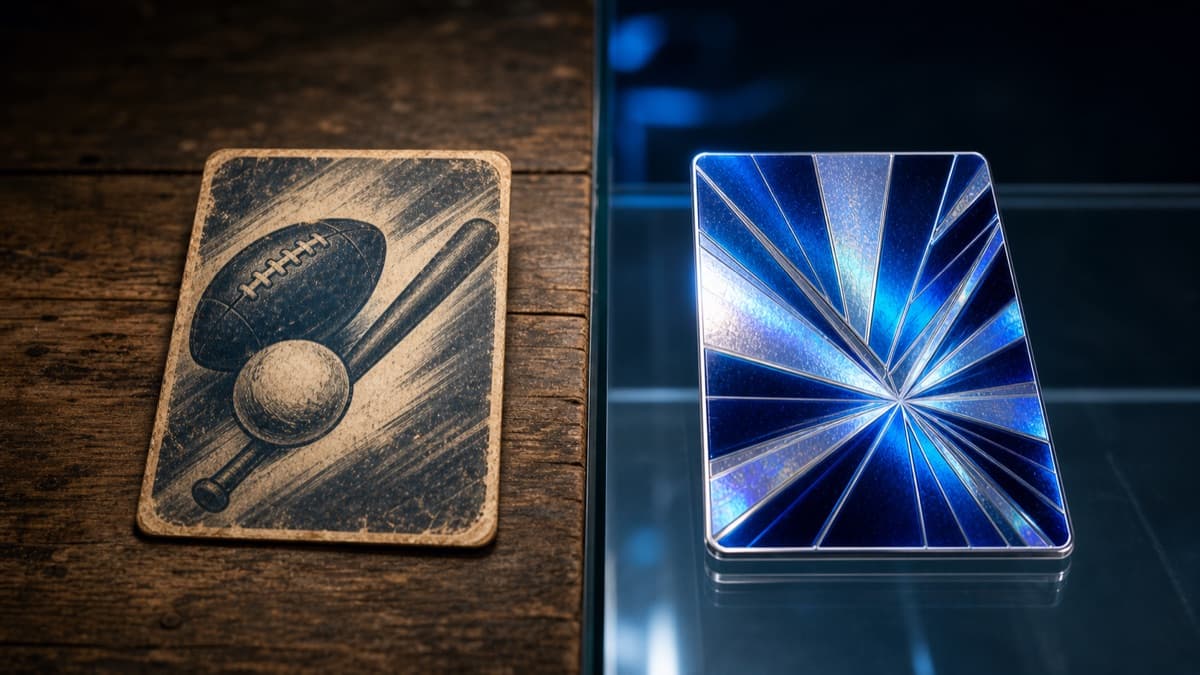
Walk a card show and you'll see two hobbies sharing one roof. On one table: tobacco cards, 1950s Topps, stars in black and white — history you can hold. On the next: chrome refractors, serial numbers, on-card autographs of players still in their first contract. Vintage and modern collecting share DNA but reward different skills, carry different risks, and attract different temperaments.
Understanding the split — usually drawn around 1980 — makes you better at whichever side you choose. Most collectors eventually hold both.
Where the scarcity comes from
The fundamental difference is how each era gets its rarity. Vintage scarcity is survival. Old cards were printed for kids, and kids treated them like kids do: flipped, taped, carried in pockets, thrown away by the millions when the owners left for college. Nobody engineered a 1952 Mantle to be scarce — time and mothers cleaning bedrooms did it. High-grade survivors of any vintage star are genuinely, permanently rare.
Modern scarcity is manufactured. After the junk wax era proved that unlimited printing kills value, manufacturers rebuilt the hobby on deliberate limits: serial-numbered parallels, one-of-ones, short prints, limited autographs. The scarcity is real, but it's designed — and every new release adds more "rare" cards to the world.
Condition plays by different rules
On vintage cards, flaws are expected and forgiven in price: a mid-grade 1960s star is still a treasured card, and even low-grade copies of iconic cards have strong markets. The grade ladder is long, and every rung has buyers.
Modern cards live and die at the very top. Printed with modern precision and sleeved from pack to slab, they exist in gem mint by the thousands — so the market often pays a real premium only for the 10, with steep drops at 9 and below. That's also why grading economics differ so much by era; see Is Grading Worth It? for the math.
Volatility, liquidity, and what moves prices
Modern is the hobby's fast lane. Prices react to last night's game, injury news, and playoff runs; the same rookie card can double and halve inside a season. That volatility cuts both ways — it's where the spectacular gains happen, and the spectacular losses. Liquidity is excellent for hot players, thin for cold ones.
Vintage moves like the established collectible it is. Careers are finished, legacies are settled, populations are known — so prices respond to collector demand and macro forces rather than box scores. It historically holds value better through downturns (the pattern covered in our market overview), at the cost of the explosive upside modern can deliver.
The risks each era carries
Each side has its own tax to pay:
- Vintage: counterfeits and alterations concentrate where cards are old and valuable — trimming, recoloring, reprints. Stick to graded copies of significant cards, and know the counterfeit checks.
- Modern: career risk (the player might bust), parallel overload (knowing WHICH version matters), and print-run opacity when manufacturers don't disclose quantities.
- Both: paying hype prices. Sold comps and population reports are your defense everywhere.
Choosing your mix
A useful frame: vintage collecting resembles owning blue-chip assets — slower, steadier, anchored by history. Modern collecting resembles growth investing — higher ceiling, higher variance, demanding more active attention. Neither is superior; they're different tools.
Many seasoned collectors run a barbell: cornerstone vintage or established-legend cards they never intend to sell, plus a measured budget for modern chases they enjoy following. The mix depends on your temperament, your fandom, and honestly, what makes you happiest to open the safe and look at.
You'll find both eras in our catalog — graded, verified, and priced to real comps — with fresh pieces landing in live auctions regularly.
Ready to hunt?
Graded slabs, sealed boxes, and live auctions — verified and insured.