Collecting Sports Cards With Kids: A Family Guide
July 9, 2026 · 6 min read · By BGLAD
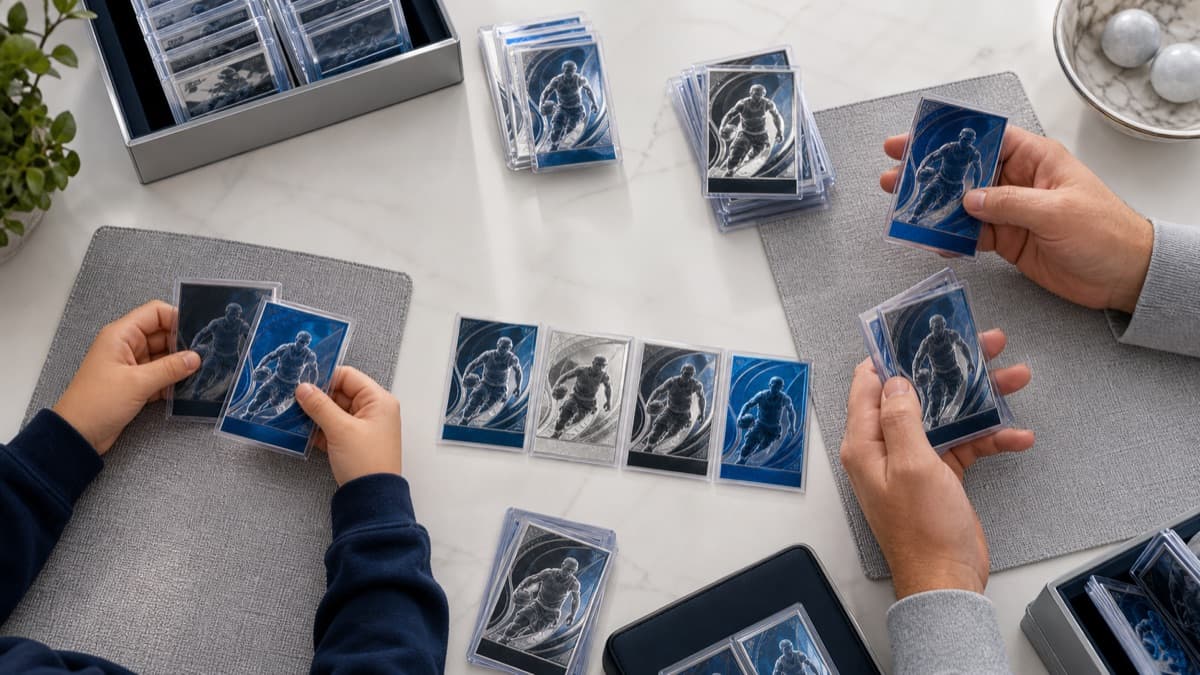
Collecting sports cards with kids works best when the goal is fun, connection, and learning instead of pulling the most valuable card. A family collection can teach sorting, patience, care, budgeting, reading, sports history, and decision-making if adults keep the pace grounded.
Kids often enjoy the parts adults rush past: opening slowly, reading names, grouping teams, trading duplicates, and choosing favorite designs. The collection does not need to be expensive to matter.
Keep kids' sports card collecting fun over valuable
The healthiest starting point is simple: collect what the child likes. That may be a favorite team, a local player, a mascot, shiny cards, funny photos, jersey colors, or cards from a game they watched with family. Adults can explain value, but value should not become the whole conversation.
When every pack is framed around money, kids learn to judge the experience by one result. That can turn a hobby into disappointment quickly. Instead, build rituals: open a pack together, read the cards, pick a favorite, sleeve anything special, and sort the rest.
Our beginners guide to collecting sports cards is useful for adults who want the basics before helping a child. If the child starts asking why certain cards matter, why rookie cards matter gives you a simple next conversation.
- Favorite card of the pack: choose one card for any reason, not just price.
- Team pile: sort cards by team so kids can recognize uniforms and logos.
- Player pile: group repeat players and talk about positions or eras.
- Design pile: let kids choose cards by color, photo, foil, or layout.
- Trade pile: set duplicates aside for low-pressure trading with family or friends.
Budget products and simple buying rules for families
A family card budget should be predictable. Kids do better when expectations are clear before they reach the shelf or the counter. Decide whether the day is for one pack, one small box, a few low-cost singles, or just browsing. The rule matters more than the amount.
Packs are fun because they create surprise, but singles are better for teaching choice. A child who picks one favorite player from a value box is practicing comparison, budgeting, and delayed gratification. Both approaches can fit as long as the adult sets limits.
If your family enjoys opening sealed product, our sealed boxes are one option when the format fits your budget. We still recommend mixing sealed product with singles so the child learns that collecting is not only about the unknown card inside a pack.
- Set the limit first: say the budget before shopping begins.
- Use cash or a visible tally: help kids see that each choice uses part of the budget.
- Compare two options: one pack versus several singles is an easy lesson.
- Avoid make-up spending: do not buy more just because the first pack was quiet.
- Celebrate the keeper: end with the card they liked best, not the card a price app liked best.
Sorting and organizing sports cards as an activity
Sorting is where many kids become collectors instead of just pack openers. It gives them control over the cards after the wrapper is gone. Younger kids can sort by color, team, or sport. Older kids can sort by set, year, player, card number, condition, or keep-trade-donate piles.
Binders work well for visual collectors because kids can flip through progress. Boxes work better for larger stacks. Team bags are useful for small groups, projects, or starter sets. The system does not need to be perfect. It needs to be easy enough that the child can use it without an adult rebuilding it every time.
- Binder page challenge: fill a nine-pocket page with one team, one player, or one color theme.
- Number order: arrange a small stack by checklist number.
- Duplicate hunt: find doubles and decide which copy looks cleaner.
- Condition detective: compare corners and surfaces with a light touch.
- Story page: build a page from a game, season, team, or family memory.
Teach card care without making kids afraid to handle cards
Card care should feel like responsibility, not panic. Kids need to handle cards to enjoy them. The goal is to teach clean habits and show which cards deserve extra protection. Start with clean hands, clear table space, no food or drinks nearby, and gentle handling by the edges.
Use penny sleeves for favorites and top loaders for better cards. Binders are good when pages are not overfilled and cards are inserted carefully. For more detail, our guide to how to store and protect your collection walks through supplies without making every card feel fragile.
- Hands clean: wash and dry hands before sorting.
- Table clear: remove drinks, crumbs, markers, and sticky items.
- Edges first: hold cards by the sides when possible.
- Sleeve favorites: protect cards the child cares about, not only expensive ones.
- One special box: give the best cards a clear home so they do not float around.
Avoid gambling-adjacent habits with young collectors
Cards involve surprise, and surprise is part of the fun. The adult's job is to keep that surprise from becoming the only source of excitement. Avoid language that makes every pack a win-or-lose event. Do not promise that a box will pay for itself. Do not keep ripping because the first result was disappointing.
It helps to separate pack opening from value checking. Open, sort, choose favorites, and put cards away first. Look up values later only when there is a real reason, such as deciding whether to protect, trade, sell, or grade a card. This teaches that price is information, not the entire point.
- Use collection language: favorite, keeper, duplicate, team card, rookie, shiny, trade.
- Limit chase language: avoid hit, loser pack, paid for the box, or due for something big.
- Do not chase losses: stop when the planned packs are opened.
- Model patience: wait for a single instead of ripping more for one player.
- Talk about odds gently: rare cards are rare; not pulling one is normal.
Common questions about collecting sports cards with kids
What age is right to start? Any age can enjoy cards with supervision, but the format should match the child. Younger kids may like durable commons, team sorting, and binders. Older kids can handle checklists, budgets, and condition conversations.
Should kids trade cards? Yes, if the stakes are low and the rules are clear. Start with duplicates or cards both sides truly want to trade. Adults should help with anything valuable, sentimental, autographed, graded, or hard to replace.
Should a child's cards be graded? Usually not at first. Grading can be useful for special cards, but early collecting is better focused on handling, sorting, learning condition, and building taste before adding fees and waiting.
Ready to hunt?
Graded slabs, sealed boxes, and live auctions — verified and insured.