Memorabilia Provenance: Building Chain of Custody
July 9, 2026 · 5 min read · By BGLAD
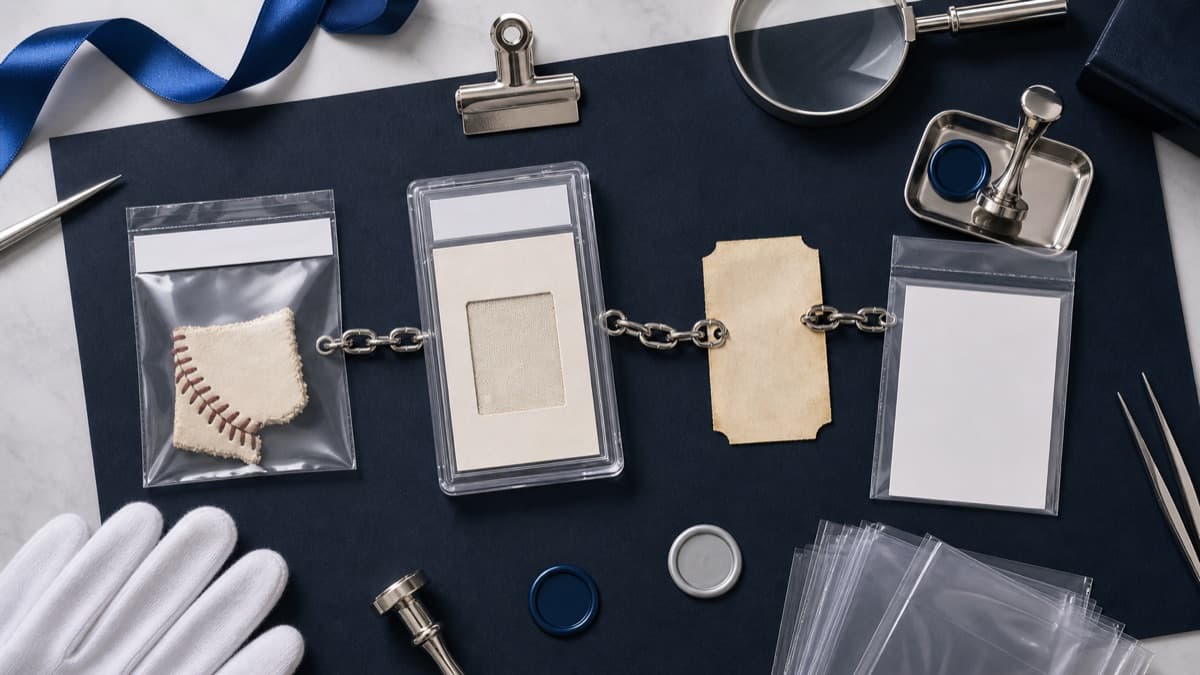
Memorabilia provenance is the documented ownership story behind a collectible, while chain of custody is the path that item took from its source to the current owner. Strong records do not make every claim true, but they make the claim easier to test, explain, insure, and sell.
We see provenance as the file that travels with the item. The object matters first, but the paperwork, photos, receipts, messages, and authentication records are what keep the story from fading into memory.
What provenance means in sports memorabilia
Provenance answers a basic question: how do we know where this came from? For a signed baseball, it might include a witnessed signing record and authentication lookup. For a game-used jersey, it might include team paperwork, league authentication, photo matching, auction history, and prior owner records. For vintage memorabilia, it may include family letters, old collection notes, period photos, or dealer invoices.
Chain of custody is the timeline inside that story. It shows who had the item, when they had it, and how it moved. A perfect chain is rare, especially with older material. But every documented step lowers the amount of trust a future buyer has to place in a verbal explanation.
The key is matching the provenance to the claim. A receipt proves a purchase, not game use. A signed letter proves someone made a statement, not automatically that the statement is correct. A league database entry proves the official record says what it says. Good collectors keep each piece of evidence in its proper lane.
Documents that strengthen chain of custody
Useful provenance is specific, dated, and tied to the physical item. A generic certificate can be better than nothing, but a file with photos, codes, invoices, and item descriptions is far stronger. The goal is to let another collector understand the same story without needing you in the room.
We like documentation that identifies the object in more than one way. Serial numbers, hologram codes, tag photos, inscriptions, repairs, dimensions, manufacturer marks, and close-ups of wear can connect a paper record to the actual item. If paperwork could be moved to any similar jersey or bat, it is weaker.
- Original source records: team letters, league hologram lookups, signing records, or player-family documentation.
- Transaction records: invoices, auction descriptions, receipts, seller messages, and consignment notes.
- Object photos: full views plus tags, labels, repairs, signatures, holograms, and unique wear.
- Research files: photo-match reports, screenshots, published images, and notes explaining comparisons.
- Care records: framing, conservation, repairs, reholdering, insurance schedules, and appraisal notes.
How provenance gaps hurt a memorabilia story
A gap is not automatically fatal. Many real items spent years in closets, equipment rooms, team storage, player collections, or family estates before anyone documented them. The problem is that a gap forces the buyer to rely more heavily on the object itself and less on the story around it.
Some gaps are manageable. If a bat has strong player characteristics, period-correct markings, and a reputable later authentication opinion, a missing early receipt may be acceptable at the right price. Other gaps are serious. A jersey claimed to be from a famous game but lacking photos, team records, auction history, or identifying wear should not be priced like a confirmed example.
Language helps manage uncertainty. Attributed, believed to be, style-matched, team-issued, and from the collection of are not bad phrases when used honestly. They simply tell the buyer where proof stops. Our team documentation and COAs guide explains why the source and wording of a certificate matter as much as the paper itself.
Building your own provenance file
The best time to build provenance is the day you acquire the item. Save the listing, invoice, payment record, seller messages, shipping label, authentication lookup, and any photos from the original sale. Then take your own clear photos before the item is framed, worn, stored, or moved.
Keep the file in two places if the item matters. A folder with printed papers helps during resale or insurance review, while a digital folder protects against lost paperwork. Name files clearly, include the date, and avoid separating certificates from the object. If you frame a jersey, keep copies of the tags and holograms visible in your records.
Provenance should also record changes. If a bat is professionally mounted, a jersey is framed, a signature is authenticated later, or a damaged case is replaced, note it. Future buyers are more comfortable when changes are disclosed plainly instead of discovered by surprise.
Common questions about memorabilia provenance
Can you sell an item with weak provenance? Yes, but the price and description should reflect the uncertainty. A vague story may still be collectible if the object is attractive and the buyer understands what is proven and what is not.
Is provenance more important than authentication? They work together. Authentication is an opinion or source record about a claim. Provenance is the broader file that explains where the item has been. Our authenticating sports memorabilia guide shows how those pieces fit with the object itself.
What should you send when selling or consigning? Send the item photos, paperwork, receipts, lookup screenshots, prior listings, and any research notes. When collectors sell or consign with us, a clean provenance file helps us describe the item accurately and avoid stretching beyond the evidence.
Ready to hunt?
Graded slabs, sealed boxes, and live auctions — verified and insured.