Autopen Signature: Clubhouse and Secretarial Autographs
July 9, 2026 · 5 min read · By BGLAD
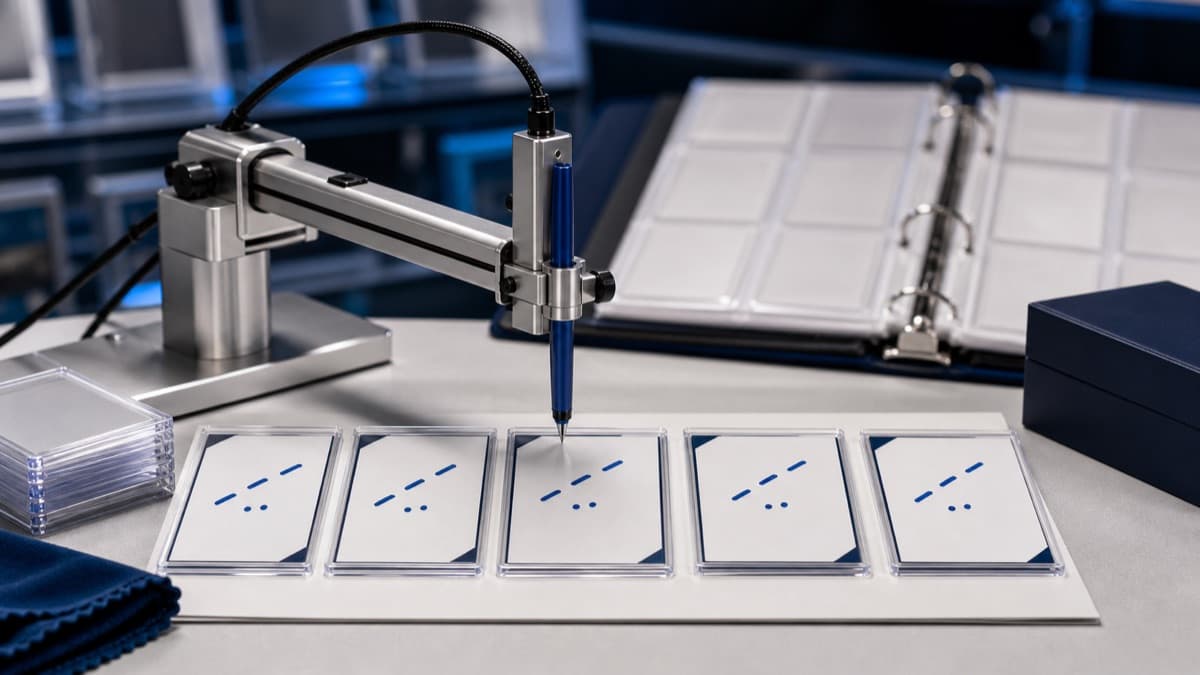
An autopen signature is made by a machine that reproduces a person's autograph pattern, while clubhouse and secretarial signatures are signed by another human on the person's behalf. They can look convincing at a glance, but collectors should treat them differently from hand-signed autographs by the named person.
This topic matters because intent and disclosure drive trust. A machine-applied or assistant-signed item may be an interesting artifact, but it should not be priced, described, or sold as a genuine hand-signed autograph from the athlete or public figure.
What an autopen signature is
An autopen uses a mechanical device to move a pen through a stored signature pattern. The result is real ink on the item, but the named person did not personally write that specific signature. That difference is the whole point. Ink alone does not equal a hand-signed autograph.
Autopen signatures are common in high-volume response settings because they let offices answer fan mail, official requests, or routine correspondence without the person signing every piece. Depending on the context, an autopen may be an accepted office practice or an unwanted surprise for a collector who expected a hand signature.
For collectors, the key question is not whether the item has ink. It is who moved the pen. If the answer is a machine, the item belongs in a different category than a witnessed signing, an authenticated in-person autograph, or a certified pack-pulled autograph.
Clubhouse and secretarial signatures explained
A clubhouse signature is generally associated with sports settings where someone around the team signs for a player, often to satisfy requests quickly. A secretarial signature is a broader term for an assistant, staff member, family member, or office worker signing for the named person. In both cases, another human writes the autograph.
These signatures can be harder to detect than autopen because they have natural variation. A skilled stand-in may know the basic shape of the signature and can add the human rhythm that a machine lacks. That does not make it genuine. It only means the detection problem is different.
Through-the-mail collecting is one place where these questions come up often. A collector may send a card or photo and get back a signed item that looks right until compared against known examples. Our TTM autograph guide explains why a returned envelope is not the same as proof that the named person signed.
Common categories of machine and stand-in signatures
Autopen, clubhouse, and secretarial signatures can appear in several collecting lanes. Fan mail responses, office correspondence, team-issued material, mass-produced photos, political mail, entertainment memorabilia, and high-demand athlete requests are all areas where collectors should slow down and ask how the signature was produced.
The risk is highest when demand is large and access is limited. A famous person with heavy mail volume may have systems for replies. A team environment may have staff or clubhouse help handling items. A public office may use mechanical signing for routine documents. None of that proves a specific item is not hand signed, but it explains why collectors should not rely on hope.
The age of the item also matters. Older items can have secretarial signatures, and newer items can have machine-applied signatures. Do not assume vintage means hand signed or modern means fake. Judge the item, the signature, the context, and the supporting evidence together.
Detection basics for autopen and secretarial autographs
Autopen detection often starts with repetition. If two signatures match too closely in size, shape, spacing, and every turn, a machine pattern becomes possible. Real hand signatures vary. They can be similar, especially in formal signings, but exact alignment across multiple examples is suspicious.
Mechanical signatures may also show blunt starts and stops, uniform pressure, unnatural curves, or places where the pen changes direction without the small imperfections of handwriting. Secretarial signatures are different. They may show natural pen movement, but the letter formation, rhythm, proportions, or habits may not match the named signer.
The best review uses comparison examples from the right era and context. One online image is not enough. Look for authenticated examples, witnessed items, and known signing habits. Our spot fake autographs guide gives a broader checklist for ink, provenance, and seller claims.
- Repeated pattern: multiple examples line up too closely to be normal handwriting.
- Mechanical stops: pen movement starts or ends in a way that feels controlled by a device.
- Uniform pressure: the line lacks natural changes from speed, angle, and hand movement.
- Wrong hand habits: letters connect, tilt, or finish differently from reliable examples.
- Context mismatch: the item came from a response channel known for high-volume replies.
Honest disclosure when buying or selling signatures
Disclosure is simple: describe the signature for what you believe it is and what evidence supports that belief. If an item is autopen, say autopen. If it is believed secretarial, say so. If it is unauthenticated and you are unsure, do not write around the uncertainty with clever wording.
Collectors can still buy autopen or secretarial material when they understand what they are getting. Some people collect presidential correspondence, team-issued fan mail, or oddball response pieces because the artifact tells a story. The problem begins when a stand-in signature is sold as if the named person signed it by hand.
If you are selling or consigning signed material and want help presenting the authentication status clearly, our sell and consign page explains how to start the conversation. We would rather pass on a confusing item than create a listing that leaves buyers guessing.
Common questions about autopen signatures
Is an autopen signature worthless? Not always, but it is usually valued differently from a hand-signed autograph. The item may still have historical, display, or novelty interest, especially when honestly described.
Can third-party authenticators identify secretarial signatures? They can often offer an opinion, especially when enough exemplars and context exist, but some cases are difficult. A declined or inconclusive opinion is better than forcing certainty where the evidence is weak.
Is a printed signature the same as autopen? No. A preprint is part of the printed image or document, while an autopen uses a pen and leaves ink. Neither is the same as the named person personally signing the item.
Ready to hunt?
Graded slabs, sealed boxes, and live auctions — verified and insured.