Card Collection Records: Receipts, Basis & Sanity
July 9, 2026 · 6 min read · By BGLAD
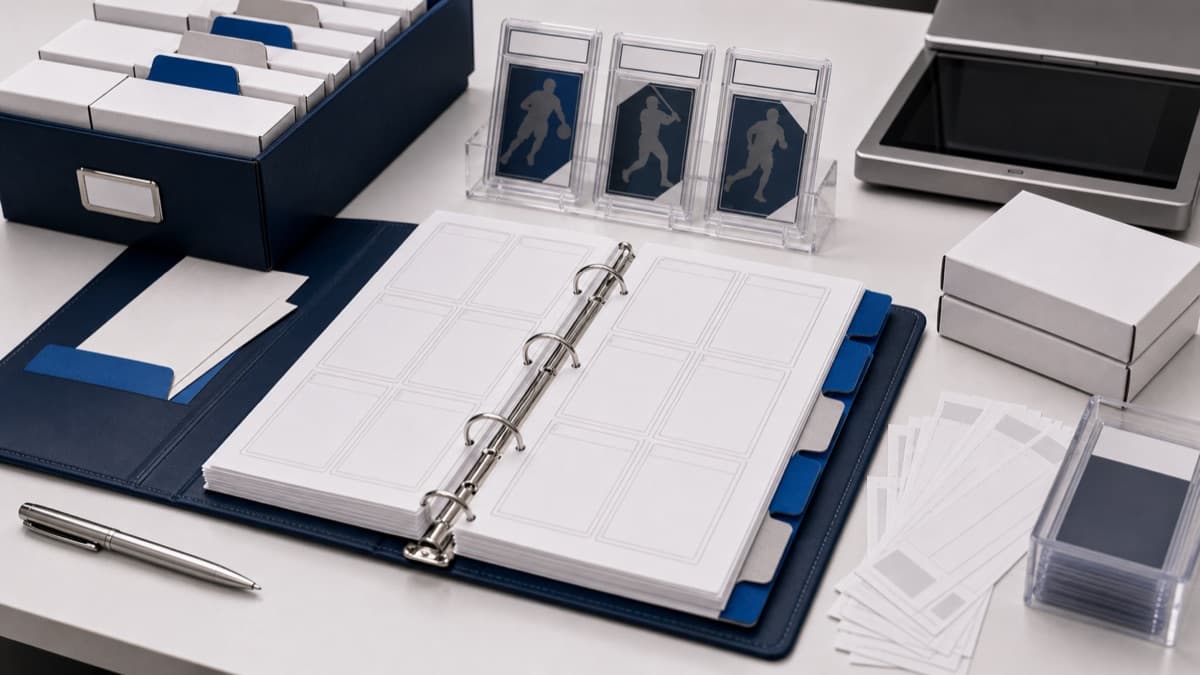
Card collection records matter because every future sale is easier when you know what you bought, what you paid, and what happened to the card afterward. We are not tax professionals and this is not tax advice; this is a practical recordkeeping framework collectors can use before talking with a qualified tax pro.
Most collectors start keeping records too late. The best system is simple enough that you will actually update it after a show, mail day, trade, grading submission, or sale.
Why sports card collection records matter when you sell
Selling a card creates questions that memory does not answer well. When did you buy it? What did you pay? Was it part of a lot? Did you pay shipping, sales tax, grading, authentication, or consignment fees? Was the card traded, gifted, inherited, cracked out, crossed over, or reholdered? Those details may matter for valuation, insurance, and tax conversations.
Good records also protect your own sanity. If you sell regularly, the year can blur together fast. A card bought raw, graded later, and sold months afterward may have three separate cost points plus shipping and fee notes. Without a record, you are guessing backward.
Records make selling decisions clearer too. If you know your all-in number, you can compare an offer against reality instead of emotion. That connects directly to pricing discipline, which we cover in how to price your cards.
- Purchase date and seller or venue.
- Card details: year, set, player, card number, parallel, grade, and cert if graded.
- Purchase price and any obvious acquisition costs you want your tax pro to review.
- Sale date, sale price, platform, fees, shipping, and payment notes.
Tracking cost basis for cards in plain English
In plain collector language, cost basis starts with what you have into the card. The simplest version is purchase price. Depending on the situation, other costs connected to acquiring or preparing the card may also be relevant, which is exactly why we do not treat this article as tax advice.
The hard part is not the definition; it is the habit. A receipt in an email, a cash purchase at a show, a trade with partial cash, and a bulk lot all leave different paper trails. Your job is to capture enough detail that a tax professional can understand what happened later.
For lots, do not leave the whole purchase as one vague number forever. If one card clearly carries most of the value, note that. If ten cards are the reason you bought the lot and the rest is true bulk, assign a reasonable internal breakdown while the lot is fresh in your mind. You are not trying to build a courtroom exhibit every night; you are trying to avoid a blank page two years from now.
A simple card spreadsheet that collectors will use
A perfect system that you abandon is worse than a basic spreadsheet you update. We like one master inventory file with a second tab for sales. If that feels like too much, start with one table and a notes column. The point is to capture facts quickly, not to build software.
Use consistent names. If you call one card "Prizm Silver" in one row and "silver prizm" in another, searching gets messy. Standardize player names, card numbers, grading companies, and cert numbers. Photos help too, especially for raw cards with visible flaws or for slabs where the cert is important.
If you already sort by boxes, teams, players, or PC categories, let the record match how you physically store cards. Our guide to sorting and cataloging your collection can help connect the spreadsheet to the actual boxes on your shelf.
- Inventory tab: what you own and where it is stored.
- Cost tab or columns: purchase price, date, venue, shipping, grading, and notes.
- Sales tab: buyer or platform, sale price, fees, shipping, date, and tracking.
- Document folder: receipts, screenshots, invoices, grading submissions, and consignment statements.
Receipts, screenshots, and sale notes for card collectors
Receipts do not need to be fancy. A marketplace order page, invoice, payment confirmation, show receipt, grading submission, shipping label, or consignment statement can all help reconstruct the story. For cash buys, write a quick note the same day: date, seller if known, location, cards, and price.
Screenshots are useful because listings disappear. Save the listing title, photos, description, final sale page, and message thread for meaningful purchases. If a card has condition issues, screenshot those too. A future buyer, insurer, or tax pro may need to know whether damage existed before you owned it.
For higher-value cards, keep the record with the card's identity. A cert number, serial number, or clear front-and-back photo prevents confusion when you own multiple copies. If you buy and sell through our marketplace listings, save the order details the same way you would from any other venue.
General tax awareness without pretending to give advice
Tax treatment depends on facts we cannot know from behind a counter: your filing situation, whether you are a casual collector or operating like a business, how the card was acquired, how long you held it, what records exist, and what rules apply when you sell. That is why we recommend talking with a CPA, enrolled agent, or tax attorney if sales are meaningful.
Be careful with online summaries, including ours. Tax forms, marketplace reporting rules, thresholds, and interpretations can change. A payment form or marketplace statement may show gross proceeds without answering what you paid for the card. That is where your records become useful.
Also be honest about gifts, inherited collections, trades, and consignments. Those situations can be more complicated than a simple buy-and-sell record. Put notes in the file, keep supporting documents, and ask a professional how to handle them.
Common questions about card collection records
How detailed should card collection records be? Detailed enough that someone else can understand the transaction without relying on your memory. For inexpensive bulk, grouped notes may be fine. For meaningful cards, track the exact card and supporting documents.
Do collectors need receipts for every card? We cannot answer that as tax advice, but from a practical standpoint, receipts help. If you do not have a receipt, write down what you know and keep any supporting evidence you do have.
What if you are selling an old collection with no records? Start from today. Inventory the cards, photograph better items, document current sale activity, and talk with a tax pro before assuming how basis or reporting should work. Our selling sports cards guide can help organize the selling side.
Ready to hunt?
Graded slabs, sealed boxes, and live auctions — verified and insured.