Sports Card Scams & Shill Bidding: Protect Yourself
July 9, 2026 · 5 min read · By BGLAD
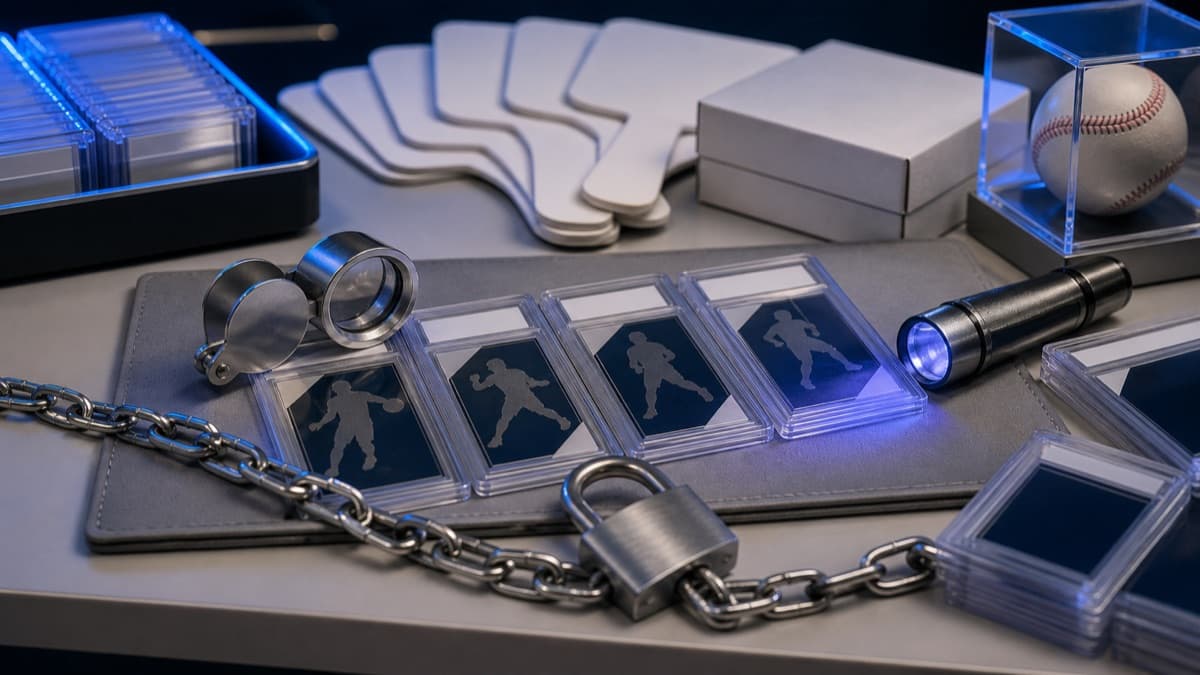
Sports card scams usually work by rushing the buyer, hiding weak proof, or pushing payment outside normal protections. Slow the deal down, verify the card and seller, and keep every important part of the transaction on record.
Most hobby deals are honest. The point of a scam checklist is not paranoia; it is keeping your process steady when a listing looks exciting.
Common sports card scam patterns online
The most common scam pattern is urgency attached to a deal that looks too good. A seller has a card priced well below recent comps, claims they need money immediately, and asks for a payment method that gives you little recourse. The price is the hook. The pressure is the warning sign.
Another pattern is borrowed proof. Scammers may reuse photos from an old listing, crop out cert numbers, show only one angle, or send a timestamp that does not actually prove they have the card. For graded cards, the slab, label, cert, and card all need to make sense together. For raw cards, clear front-and-back photos are the bare minimum on any meaningful purchase.
Fake or altered cards are a separate problem, but the process overlaps. If the card, price, and seller story do not line up, stop and verify before paying. Our guide to spotting fake cards and slabs gives a deeper inspection routine.
- A price far below sold comps with no clear reason.
- Pressure to pay quickly or outside the platform.
- Refusal to provide new photos, video, or basic card details.
- A seller account with thin history, sudden high-value listings, or copied descriptions.
Shill bidding signs in card auctions
Shill bidding is artificial bidding used to push the price higher. It can be hard to prove from the outside, so we focus on behavior that should make you more cautious rather than pretending every odd bid is fraud.
Watch for repeated bidder patterns around one seller, especially accounts that bid often but rarely win. Be cautious when a card jumps in small increments from the same bidder, stalls, and then gets relisted later. Also pay attention to private feedback, brand-new bidders on only one seller's items, and auctions that repeatedly end high but do not seem to complete.
None of those signs is proof by itself. A real collector may bid aggressively and still lose. A relist may happen because a buyer did not pay. The practical move is to set your maximum bid before the auction gets heated. If the bidding pattern feels off, let someone else own the risk. Our article on card auctions vs fixed price explains why auction format can reveal demand, but it can also magnify emotion.
Payment protection habits for card buyers
Payment method matters. Use platforms and payment routes that create a documented dispute path if the card never arrives or arrives materially different from the listing. Avoid friends-and-family style payments, wire transfers, gift cards, crypto, or other hard-to-reverse methods unless you truly know the person and accept the risk.
Keep communication inside the selling platform when possible. A seller who insists on moving the deal to text, direct message, or a different payment app may be trying to remove the record. Screenshots can help, but a platform-native message trail is usually cleaner if something goes wrong.
Shipping is part of payment protection too. Tracking, insurance, signature confirmation, and clear packaging expectations matter more as value rises. If you want to compare how protected listings should be presented, our marketplace listings show the kind of card detail and transaction trail collectors should expect.
- Use protected checkout when buying from someone you do not personally know.
- Confirm the seller's name, platform account, and shipping address expectations before paying.
- Save the listing, photos, messages, payment confirmation, tracking, and delivery scan.
- Open disputes within the platform's required window if the deal goes wrong.
Private deal red flags in the sports card hobby
Private deals are not automatically unsafe. Many collectors buy, sell, and trade directly with people they know. The risk increases when the relationship is thin, the card is expensive, and the seller wants the buyer to absorb all trust risk upfront.
Use references carefully. A list of names is not the same as real accountability. Ask how recent the references are, whether the person handled similar-value cards, and whether the transaction was shipped or local. Be skeptical of accounts that only have feedback from the same small circle.
For trades, confirm both sides' shipping plan before either package leaves. Agree on tracking, insurance, declared value, timing, and what happens if one package is delayed or damaged. A trade can go bad even without fraud if the terms are vague.
How to report card scams and preserve evidence
If you think you were scammed, preserve evidence before confronting the seller. Save listing pages, photos, messages, usernames, payment receipts, tracking numbers, package photos, and any authentication results. Do not rely on the listing staying online.
Start with the platform where the deal happened. Then contact the payment provider or card issuer if money changed hands. If the shipment is involved, contact the carrier. For mail-related fraud, the Postal Inspection Service may be relevant. For broader internet fraud, collectors often report through federal consumer or cybercrime reporting channels, depending on the situation.
Keep the report factual. Dates, amounts, usernames, tracking numbers, and screenshots are more useful than long arguments. If you receive a fake card, do not alter it, crack it, or send it around without documenting the current condition first.
Common questions about sports card scams
Can a verified-looking seller still scam someone? Yes. Accounts can be compromised, feedback can be manipulated, and good sellers can still make serious mistakes. Verification helps, but it does not replace card-level inspection and protected payment.
Is every last-second auction bid suspicious? No. Sniping is common in online auctions. The bigger concern is repeated suspicious behavior around the same seller, especially when bids appear to lift prices without normal buying behavior.
What should beginners do before buying expensive cards online? Start with smaller purchases, learn comps, and use a safety checklist. Our guide to buying sports cards online safely is the right next step before sending serious money.
Ready to hunt?
Graded slabs, sealed boxes, and live auctions — verified and insured.