BGS Black Label: Beckett Grading Explained
July 9, 2026 · 5 min read · By BGLAD
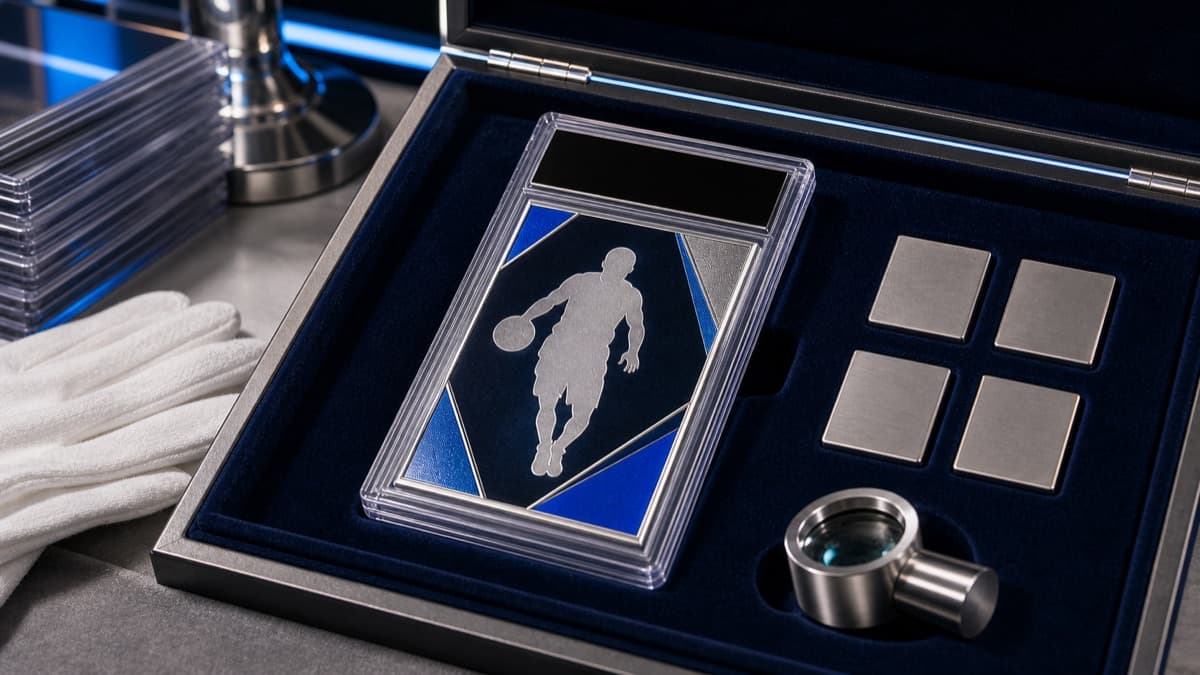
BGS black label usually refers to a Beckett card that received a Pristine 10 overall grade with perfect 10 subgrades in every public category. It is the most recognizable BGS premium label, but the whole Beckett system is built around subgrades, not just the black label chase.
We like BGS most when the label explains the card clearly. If the premium depends only on a rare label color and not on visible card quality, we slow down and make the math defend itself.
How Beckett grading and BGS subgrades work
BGS is Beckett's card grading service for many modern and vintage sports cards. Collectors associate BGS with a sturdy holder, a flip that can show subgrades, and a grading structure that breaks condition into centering, corners, edges, and surface.
Those subgrades are the main reason many collectors still pay attention to Beckett. Instead of seeing only one final number, you can see which part of the card held the grade back or supported it. A card with 9.5 centering, 10 corners, 9.5 edges, and 9 surface tells a different story than a card with the same final grade but a weaker centering score.
Subgrades do not remove subjectivity, and they do not guarantee a premium by themselves. They are evidence. Our deeper guide to card grading subgrades explains how to use those category scores without treating them like a calculator that answers every pricing question.
- Centering: how evenly the design sits inside the borders.
- Corners: the sharpness and cleanliness of all four corners.
- Edges: chipping, rough cuts, whitening, or damage along the sides.
- Surface: print lines, dents, scratches, dimples, gloss issues, and residue.
BGS 9.5 Gem Mint vs BGS 10 Pristine
The most common Beckett premium conversation starts with BGS 9.5 Gem Mint. For many modern cards, a BGS 9.5 is a strong grade, especially when the subgrades are balanced. Collectors often describe a 9.5 with multiple 10 subgrades as stronger than a 9.5 with one obvious weak category.
BGS 10 Pristine sits above Gem Mint. It signals a cleaner card by Beckett's standards, but the market still cares about the card, player, set, and visible appeal. A BGS 10 of a low-demand card is not automatically more important than a BGS 9.5 of a card with a much deeper buyer base.
That is the point we repeat at the counter: grade premium is not the same as card demand. The label can create scarcity, but buyers still have to want the underlying card. If you are comparing grading brands before submitting, our guide to sports card grading companies is the broader starting point.
What makes a BGS black label different
A BGS black label is generally understood as a Pristine 10 with four 10 subgrades. That means centering, corners, edges, and surface all reached the top public subgrade on the label. Collectors chase it because it is hard to achieve and easy to understand at a glance.
The premium can be real when the card is already desirable, the player has a deep market, and there are enough buyers who specifically care about Beckett's highest label. The premium can be fragile when the only selling point is that the label is rare. Rarity without buyer depth is still a thin market.
We also check whether the card itself looks like the label. If photos show tilt, glare, or weak focus, ask for better images before paying a black label premium. On expensive cards, the difference between a justified premium and label chasing can be large enough to change the whole deal.
BGS grading for thick cards and condition-sensitive issues
BGS has long had a following among collectors of thicker cards, patch autographs, premium stock, and condition-sensitive modern issues. Part of that is habit, part of it is holder preference, and part of it is the usefulness of subgrades when a thick card has edge or corner concerns.
Thick cards are difficult because they often show corner touches, edge chipping, surface dimples, foil issues, or factory handling marks right out of the pack. A bold autograph or strong patch does not erase those problems. Subgrades can help show whether the weakness is normal for the issue or unusually severe.
This matters when comparing similar graded slabs. A BGS 9.5 thick card with one weaker edge subgrade may still be very appealing if most copies have the same problem. A thin-stock chrome card with the same weakness might be judged more harshly because clean copies are easier to find.
Common questions about BGS black label cards
Is a BGS black label always worth more than PSA 10? Not always. Some cards bring a black label premium, while others are more liquid in a PSA holder. The correct comparison depends on the specific card, recent sales, and buyer base.
Should you crack a BGS 9.5 to chase PSA 10 or BGS 10? Only when the card, subgrades, value spread, and risk all support it. Cracking removes the current certified grade and can create downside. Our guide to crossovers, crack-outs, and regrades covers that decision more carefully.
Do BGS subgrades make a card easier to sell? They can help when buyers care about the category detail, especially on high-end modern cards. But the market still starts with card demand, authenticity, condition, and price. Subgrades are support, not a substitute for the card itself.
Ready to hunt?
Graded slabs, sealed boxes, and live auctions — verified and insured.